Ultra-freeze process preserves vitamin C in passionfruit pulp
A new study has found that when it comes to preserving food, there is no single response to cold. Each nutritional component reacts differently, and understanding those differences is key to designing the foods and preservation processes of the future.
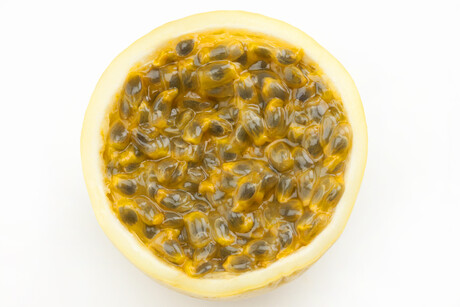
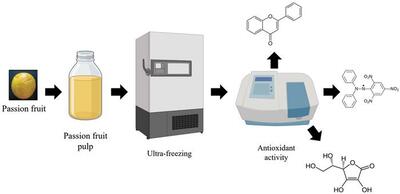
The team of researchers from the Escuela Superior Politécnica del Litoral (ESPOL) and the University of Guayaquil (UG), in Ecuador, studied what happens to yellow passionfruit pulp (Passiflora edulis f. flavicarpa) when it undergoes cryogenic ultra-freezing with liquid nitrogen at -196°C.
The results reveal two sides of the same technology: while vitamin C remained virtually intact, other components linked to the fruit’s antioxidant capacity dropped significantly.
The findings provide information for developing better preservation methods for tropical fruits shipped through long-distance supply chains, and they respond to a growing industry trend: preserving food with fewer additives while retaining as many of its original properties as possible.
Freezing in seconds
Conventional freezing removes heat slowly, which encourages the formation of ice crystals that can damage the structure of food. Cryogenic technology speeds up that process dramatically.
To test its effects, the researchers worked with passionfruit grown in the Ecuadorian provinces of Manabí and Esmeraldas. The fruits were selected at a suitable stage of ripeness, and their pulp was extracted, homogenised and vacuum-packed.
Then came the thermal shock: the samples were immersed in liquid nitrogen at -196 °C until they reached a temperature of -40 °C at their core.
After controlled thawing, the researchers compared their biochemical characteristics with those of fresh pulp.
Vitamin C held up
One of the most relevant results emerged when the team measured ascorbic acid.
Fresh pulp contained 38.08 mg of vitamin C per 100 grams, while the ultra-frozen pulp contained 38.43 mg/100 g. The difference indicates that there was no detectable loss of vitamin C compared with the fresh control samples.
The result matters because vitamin C is especially sensitive to factors such as heat, oxygen and processing.
For the agrifood industry, technologies capable of preserving this nutrient could support the development of pulps and derived products that rely less on certain additives to make up for losses during processing.
But extreme cold did not protect every component equally.
The limit: antioxidants
When the team analysed the pulp’s total antioxidant capacity, the researchers found a 23.6% decrease after the cryogenic treatment.
The differences were even greater for two specific groups of bioactive compounds: total phenolics fell by 40.3% and flavonoids by 35.7%.
Why do some components hold up while others do not?
The answer may lie in what happens inside the cells during freezing and subsequent thawing.
Although ultra-rapid cooling favours the formation of smaller ice crystals, these can still cause microscopic damage to the cellular structures of a pulp with a very high water content.
During thawing, the rupture of these compartments can allow natural enzymes, such as polyphenol oxidase and peroxidase, to come into contact with phenolic compounds that were previously kept separate inside the cells.
That encounter can accelerate oxidation and help explain the reduction observed in some antioxidants.
The next challenge
The results show that preserving vitamin C does not necessarily mean preserving a fruit’s entire nutritional matrix.
For the food industry, this distinction is important. A technology can be highly effective at protecting one compound and, at the same time, require adjustments to preserve others.
That is why the next step will be to study strategies that complement ultra-freezing. These include treatments that reduce enzyme activity before the pulp is frozen, or packaging systems that limit its exposure to oxygen.
The goal would be to harness the ability of extreme cold to preserve vitamin C while reducing the loss of phenolics and flavonoids.
The study has been published in the International Journal of Food Properties.
Inside three decades of change in Australian beverages
CEO of the Australian Beverages Council Geoff Parker reflects on market shifts, innovation and...
The importance of 'Hygienic by Design' for food inspection equipment
Keeping pace with hygienic design trends across factories and equipment is important for the...
A three-level strategy for preventing moisture 'drift' in food production
Controlling moisture in food production is critical because even relatively small changes can...