What Makes an Enclosure Suitable for Hygienic Production?
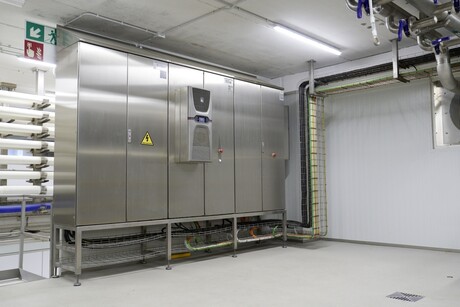
Stainless steel is widely associated with food and beverage production. Its corrosion resistance, durability and suitability for regular cleaning make it a logical material choice across processing environments.
But when electrical infrastructure is installed within hygiene-critical production areas, stainless steel is only one part of the enclosure design.
The geometry of the enclosure, surface finish, seals, transitions and external fittings all influence how easily it can be cleaned and whether liquids or product residue have areas in which to accumulate.
For food and beverage manufacturers, this creates an important distinction between an enclosure manufactured from stainless steel and one specifically engineered for hygienic production.
Rittal’s Hygienic Design (HD) enclosure range has been developed around these requirements and in accordance with EHEDG principles.
Designing the Enclosure Around Cleaning
Conventional enclosure designs can incorporate horizontal surfaces, exposed fittings, recesses and transitions that require additional attention during cleaning.
Hygienic Design takes a different approach by considering how the enclosure interacts with the cleaning process from the outset.
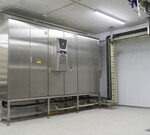
Rittal HD enclosures incorporate a 30° sloped roof, allowing liquids to drain away rather than remain on top of the enclosure. Smooth stainless-steel surfaces and rounded transitions further reduce areas where product residue and contaminants can accumulate.
Sealing is treated in the same way.
External blue silicone seals provide clear visual differentiation and are designed without gaps or joints. The sealing system is also resistant to commonly used cleaning agents and disinfectants.
With protection up to IP69, the enclosure system is designed for production environments subject to intensive cleaning processes.
These details work together to create an enclosure designed around cleanability rather than simply manufactured from a hygiene-compatible material.
See Hygienic Design in Detail
See how Rittal Hygienic Design solutions address enclosure geometry, sealing and cleanability for hygiene-critical production environments.
Watch the video:
Hygienic Design in a Production Environment
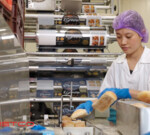
These principles can be seen in practice at Liquats Vegetals, a Spanish producer of plant-based beverages supplying more than 45 countries.
Operating to EHEDG hygiene standards, the company uses Rittal HD stainless-steel enclosures throughout its production environment to protect electrical and control equipment while supporting its cleaning and hygiene requirements.
For Liquats Vegetals, hygienic design begins at component level.
Tasio Corachan, Process and Continuous Improvement Manager at Liquats Vegetals, explains:
“When developing production methods, we follow the quality standards of the European Hygienic Engineering & Design Group (EHEDG). We decided some years ago that the components used in production — such as enclosures — must meet EHEDG standards.”
The decision also extends beyond immediate hygiene requirements to the expected service life of production infrastructure.
“We need to be able to rely on the quality of the components in our production equipment over a period of many years.”
The installation demonstrates an important aspect of hygienic engineering. Electrical infrastructure does not sit separately from the production environment.
Enclosures may house the control equipment behind the process, but their external surfaces remain exposed to the same cleaning routines and environmental conditions as surrounding production equipment.
Looking Beyond Stainless Steel
This is why specifying stainless steel alone does not necessarily address all the requirements of a hygiene-critical installation.
Two stainless-steel enclosures can differ considerably in their geometry, surface finish, sealing and external construction.
In food and beverage production, those differences influence how easily an enclosure can be cleaned and whether its design introduces areas where liquids or residues may accumulate.
Rittal has developed a comparison of food-grade and non-food-grade enclosures covering these differences, including enclosure geometry, sealing, surfaces and protection for washdown environments.
Compare food-grade and non-food-grade enclosures: click here.
Engineering for Hygienic Production
Electrical enclosures have a straightforward primary function: protecting the electrical and control equipment installed inside them.
In hygiene-critical food and beverage environments, however, the enclosure itself also becomes part of the production environment.
Material selection remains important, but hygienic suitability extends further — to the roof angle, surface finish, seals, edges, transitions and protection required for the cleaning processes used around it.
By considering these factors together, Hygienic Design moves the focus from simply specifying a stainless-steel enclosure to selecting an enclosure engineered around the requirements of hygienic production.
Download Rittal’s An Appetite for Perfection brochure to explore Hygienic Design solutions for food and beverage production.
Liquats Vegetals case study originally published in be top Magazine of the Friedhelm Loh Group, Issue 01 | 2026. Story by Patricia Späth.
Beyond Ingredients: Building a Safer Food and Beverage Plant Through Better Air Quality Decisions
The future of food and beverage manufacturing depends on better decisions about everything that...
Beyond Ingredients: Building a Safer Food and Beverage Plant Through Better Air Quality Decisions
The future of food and beverage manufacturing depends on better decisions about everything that...
Robust cable solutions for food and beverage manufacturing
By choosing robust cabling from the outset, food manufacturers can help to protect the...