Inside three decades of change in Australian beverages
By Geoff Parker, CEO, Australian Beverages Council
Monday, 26 October, 2026
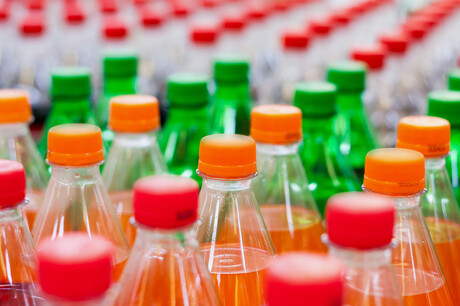
The range of drinks available today compared to 20 years ago has changed dramatically. A walk down the supermarket drinks aisle or opening a fridge in a convenience store highlights just how much the sector’s portfolio has shifted over that time.
Earlier this year, the peer-reviewed journal Nutrients published research tracking Australian non-alcoholic beverage sales from 1997 to 2024. The study was conducted independently by FOODiQ Global and commissioned by the Australian Beverages Council. It builds on three earlier studies of the same data set, so together these provide one of the longest continuous analyses available of how Australians’ drink choices have changed. The research is the only one of its kind in the world.
The headline finding is stark. In 1997, sugar-sweetened varieties made up 70% of carbonated soft drink sales. By 2024 that share had halved to 35%. Sales of low- and no-sugar have moved in the opposite direction, from 30 to 65%.
The growth in bottled water sales has been just as striking. Still and sparkling water sales grew from 4.8% of the market in 1997 to 36% in 2024, and today water sales have surpassed sugar-sweetened soft drinks outright. On average, water-based drinks now contain 54% less sugar per litre than they did in 1997, and carbonated soft drinks 31% less.
Consumption data points the same way. According to the Australian Bureau of Statistics, the share of Australians drinking sugar-sweetened beverages fell from 43.2% in 1995 to 20.9% in 2023.
This didn’t happen by accident
Shifts like this don’t happen in isolation. Behind those numbers are years of research and innovation by beverage manufacturers. Companies continue to reformulate much-loved products without losing the taste consumers expect, extend zero-sugar ranges, introduce smaller pack sizes and adopt front-of-pack Health Star Ratings.
The pace of change has picked up, too. Between 2015 and 2024, sales of sugar-sweetened carbonated drinks declined faster than any other period, coinciding with the industry’s Sugar Reduction Pledge, a voluntary commitment by the major beverage companies to cut sugar across their portfolios. The Pledge remains the nation’s only voluntary commitment to reduce sugar in products. The researchers link the two, and from where I sit, the industry’s sustained and ongoing effort in this area is very clear.
It’s also worth remembering how hard these sustained changes are for the industry to maintain. Removing sugar from a beverage isn’t as simple as it sounds. Sugar provides sweetness, mouth feel and energy. Replacing it at scale, across hundreds of products, while keeping consumers coming back, is a substantial technical and sensory challenge, and the industry has met it with innovation and investment.
Not every line is moving the same way
To be clear with the data, the picture isn’t uniform. Juice sales fell 15% between 2015 and 2024, with fruit drinks containing added sugar down 27%. As a juice consumer myself, these shifts are perplexing given the nutritional benefits juice provides to the diet. Flavoured milk rose 37% and kombucha is a growing segment. The researchers also found rising sales of energy, sports and functional drinks.
I see these changes as an opportunity rather than a red flag. These are newer, fast-moving categories, and the reformulation work that transformed soft drinks can be applied to them too. The consumer base has also diversified. People are choosing drinks for function, flavour, occasion and wellbeing as much as for refreshment, which keeps the sector innovating.
Looking ahead
The drinks fridge of 2026 is a different place from the one of 1997, and Australians clearly like having the choice. Our job, as an industry and as policymakers, is to keep listening to what the evidence tells us.

The importance of 'Hygienic by Design' for food inspection equipment
Keeping pace with hygienic design trends across factories and equipment is important for the...
A three-level strategy for preventing moisture 'drift' in food production
Controlling moisture in food production is critical because even relatively small changes can...
Digital Memosens technology for pH measurments
In food processing, pH measurement is rarely just about obtaining a number.