A three-level strategy for preventing moisture 'drift' in food production
Wednesday, 21 October, 2026
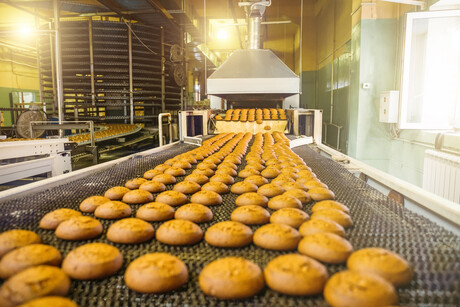
A strategy using NIR measurements traceable to laboratory reference methods, rapid at-line checks and continuous online or inline monitoring is designed to help food manufacturers detect moisture drift before it causes product to be held or wasted.
In food production, controlling moisture is critical because even relatively small changes can affect product consistency, processing performance, shelf life, package weight and finished product quality. For this reason, most food manufacturers already test moisture at some point in production.
Moisture content, however, is not the only factor. A moisture result can fall exactly where expected and still leave questions about product stability. Water activity, or Aw, addresses how much of that water is available to support microbial growth or contribute to other changes that affect quality and shelf life. Depending on the product, that can matter just as much as the moisture number itself.
Formulation complicates the relationship. Sugar, salt, proteins, starches and other ingredients all hold water differently, so the same moisture content does not necessarily produce the same Aw. Two products can test at nearly the same moisture level and still have very different amounts of available water.
Knowing what needs to be measured, however, is only part of the issue. The other is when the result becomes available. A highly accurate moisture or Aw result is still useful, but if it arrives after the product has already moved through another stage of production it may be too late to make an adjustment.
A traditional laboratory method may provide an accurate result, but the sample must still be collected, prepared and tested. By the time the result confirms that moisture has drifted outside the acceptable range, the product may have already moved to the next production stage. Where Aw is also important, the same timing issue applies — a result received too late may limit the opportunity to make a process adjustment.
To detect these changes earlier, food manufacturers can use a tiered strategy built on NIR measurements calibrated to established laboratory reference methods, with rapid testing at-line and continuous online or inline monitoring. In this way, the laboratory establishes the reference point, while faster measurements closer to production provide information soon enough to make an adjustment.
“NIR moisture meters allow very accurate instant measurement of solids, pastes, and liquids without contact or sample preparation,” said John Bogart, Managing Director of Kett US. “Once the meter has been calibrated against the lab or production standard, the calibration is stored in the device so no calibration is required in the field. Measurements are fully traceable to the original measurement method.”
Near-infrared (NIR) technology can be used in desktop, handheld, online and inline configurations and measurements available in seconds. The NIR measurements can be tied to an established laboratory reference method through calibration for direct traceability. Once developed, that calibration can be stored and used for routine measurement without repeating the primary reference method for each reading.
“Today, NIR spectroscopy provides non-destructive laboratory quality readings in real time. Often, this requires no sample preparation and no contact with the sample,” Bogard said. “These instruments offer precise, virtually instant readings of moisture, water activity, composition analysis, even full-spectrum composition.”
As a result, manufacturers can use NIR measurements traceable to the laboratory reference method closer to production to detect drift earlier and adjust while there is still time to affect the product being produced.
The roles of laboratory, at-line, online and inline testing
Laboratory reference methods establish the values used to calibrate faster measurement technologies. Methods such as Loss on Drying or Karl Fischer are accurate but can take 15 min to several hours. That may be acceptable for final verification, but it is often too slow for production adjustments. By the time the result is available, a considerable amount of product may already have been produced.
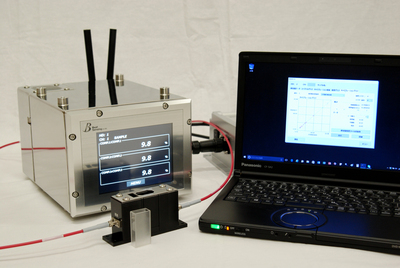
At-line testing essentially moves the measurement closer to production. An operator can collect a sample before or after a critical processing step and use a desktop NIR instrument located nearby to obtain a reading in seconds.
The faster result allows operators to increase the frequency of testing and identify moisture drift sooner. Instead of waiting for a sample to move through the laboratory workflow, the measurement is being made close enough to production to enable the information to still affect what happens next.
There are also situations where it makes more sense to bring the instrument to the product. Kett’s KJT130 Handheld Portable Instant Moisture Meter can be used for spot checks at receiving, near the production line, before or after processing, or on finished product. The operator points the instrument at the material and instantly receives the moisture reading without direct contact or sample preparation.
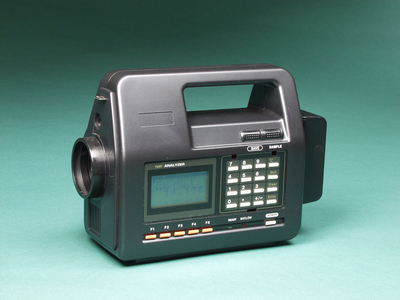
“This gives manufacturers more flexibility in where moisture is checked. Incoming ingredients can be tested before they enter production, material can be checked before, during or after a critical processing step, and additional measurements can be taken if operators suspect the process is beginning to change,” Bogart said.
Online and inline testing take this a step further by eliminating the need for an operator to periodically collect and test a sample. An online instrument can continuously measure product as it moves through production, while an inline sensor is integrated directly into the process stream.
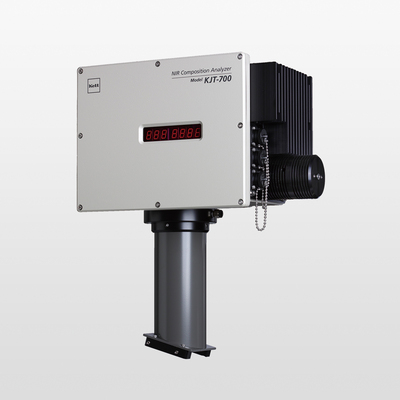
Kett’s KJT700, for example, is designed for online composition analysis during production. In addition to moisture, the instrument can be calibrated to simultaneously track a product-specific Aw value continuously, giving manufacturers real-time visibility into both total water and the corresponding water availability as product moves through the line.
For applications where the measurement must be made inside the process itself, Kett’s BSF1700 Inline NIR Composition Analyzer uses fibre-optic probes to collect continuous composition data inside equipment such as dryers, conveying lines and liquid streams. This extends the same basic strategy into areas where an open-path online instrument may not have direct access to the product.
The distinction is important because periodic testing, even when completed in seconds, still provides only a snapshot of the process at that moment. Continuous monitoring provides a much clearer picture of the direction the process is moving and can identify a developing trend before the product moves outside the acceptable range.
Where to establish moisture-control points
According to Bogart, moisture should ideally be measured where it is most likely to change, where variation entering the process can create problems later, and where there is still an opportunity to make an adjustment before more product is produced.
For many food manufacturers, the first control point is receiving. Raw ingredients can vary in moisture by supplier, season, storage conditions or shipment. If that variation is not identified before production, it can affect formulation and processing downstream. A rapid handheld or desktop measurement at receiving can identify the problem before the material enters the process.
Moisture-control points can also be established before, during and after critical steps such as mixing, drying, baking, cooking, cooling or coating. A measurement before a dryer or oven establishes incoming moisture; a second measurement shows whether the target was achieved.
“Control points should be located where operators and automation can still act on the information. Measuring closer to where moisture changes allow adjustments to temperature, airflow, residence time, feed rate, or line speed before significantly more product is affected,” Bogart said.
The final control point is often before packaging or release. At this stage, moisture testing can confirm that the finished product is within specification for factors such as consistency, shelf stability and package weight.
“Not every control point requires the same type or frequency of measurement,” Bogart said. “A relatively stable portion of the process may only require periodic handheld or desktop checks, while a critical step where moisture can change rapidly may justify continuous online or inline monitoring.”
Faster feedback reduces rework and held product
For products where Aw is also important, NIR can be calibrated against product-specific Aw reference values and used to track changes during production.
When moisture begins to drift outside the acceptable range, the amount of product affected often depends on how quickly the problem is discovered. The sooner moisture changes are identified, the sooner operators can respond. Faster at-line measurements significantly narrow that window. Instead of waiting 15 minutes to several hours for a laboratory result, operators can obtain an NIR measurement in seconds.
More frequent testing provides additional measurement points, making it easier to identify when the process started to drift. Continuous online or inline monitoring goes further by showing moisture changes as production is occurring.
As a result, material that might otherwise require rework can potentially be kept within specification, while the amount of product that must be held or discarded is reduced. The difference can be considerable in a high-volume Australian operation.
“The key is to cost-effectively be able to conduct as much testing as required, with full confidence in the results, each and every time,” Bogart said.
“A faster reading is a quicker, more efficient way of finding out there is a problem. When the measurement is tied to a defined response, it becomes a tool for controlling the process before the moisture deviation affects significantly more product.”
Bottling line for resealable aluminium beverages
A family-owned beverage producer and contract bottler in Germany required a line for its new...
58% of food manufacturers report less productivity, research finds
Argon & Co research found that Australian food and beverage workers were still doing a lot of...
Humidification solution for Tasmanian Botanics
Australian medicinal cannabis producer Tasmanian Botanics required a solution to control humidity...