The importance of 'Hygienic by Design' for food inspection equipment
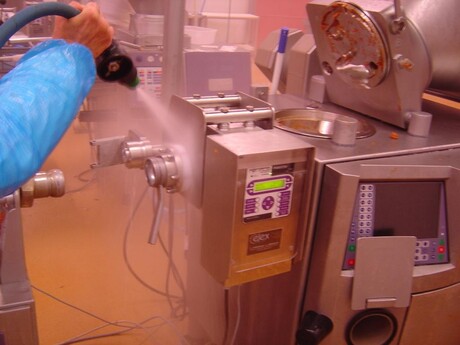
Minimising food contamination risks starts with the way production equipment is designed, built and maintained. When equipment and factory layouts follow hygienic design principles, they support regulatory compliance and help maintain cleaner production conditions. Fortress Technology NZ explores how these design choices align with the “sanitation first” priorities identified by processors in the PMMI 2025 Food Safety and Sanitation Trends report.
Food inspection equipment supports product safety by identifying contamination and production errors. However, its performance depends heavily on hygienic design. The PMMI Food Safety and Sanitation Trends report, published in November 2025, shows that ease of cleaning is now the main factor users consider when assessing new food processing and inspection equipment. The report also notes a growing focus on automated functions that reduce manual intervention during sanitation.
Keeping pace with sanitation trends
With the industry’s growing focus on preventive food safety, maintaining hygiene standards and product integrity depends on how equipment is designed, built and maintained. When production equipment incorporates thoughtful design and the right technology, it supports regulatory compliance while making cleaning easier and production conditions safer.
This has increased demand for features such as clean-in-place systems and corrosion-resistant stainless steel surfaces that simplify sanitation and reduce contamination risks.
At the same time, the regulatory landscape is evolving. The New Zealand Health and Safety at Work Act 2015 includes safety by design. Specifically, these NZ regulations require that machinery used in any aspect of food production, packing and inspection is designed and constructed in such a way to prevent contamination and the accumulation of food residues. Revisions to the Act may be incorporated into the release scheduled for mid-June 2027.
“These hygienic design principles extend to critical inspection equipment such as metal detectors, checkweighers, X-ray and combination systems, all of which must be built to withstand harsh washdown conditions and prevent residue or debris accumulation. In an industry where a single recall can redefine a brand’s future, excellence in hygiene is foundational to business resilience,” said Fortress Technology NZ General Manager Tim Whyte.
Cleaning strategies to address labour shortages
According to the 2025 PMMI report, nearly three-quarters (73%) of end users surveyed rely solely on internal teams to execute their sanitation processes. Using a combination of Clean in Place (CIP) and Clean Out-of-Place (COP) techniques is most common, with only 13% of survey respondents saying they use just one of these sanitation methods. Three-quarters of those surveyed (75%) also use a combination of wet and dry sanitation processes.
Labour shortages and employee turnover are repeatedly cited in the PMMI report as the number one operational challenge by food processors. Constant changes in personnel, including frequent onboarding of new team members, can make it especially challenging to ensure all staff are consistently meeting Sanitation Standard Operating Procedures (SSOP).
For this reason, Fortress Technology intentionally concentrates its efforts on developing smarter designs to support processors to enhance hygiene and safety measures. This includes meeting the core four design principles of cleanability and accessibility, material selection, avoidance of crevices and functionality.
Self-draining surfaces and angled frames on Fortress Technology’s stainless steel metal detector, for example, eliminate pooling, promote water runoff and faster drying. Hollow areas are sealed, and continuous welds, smooth finishes and rounded edges prevent contaminant harbourage points.
Special attention should also be paid to automated functionality and HMI features, Whyte said. Survey respondents indicate that automated functions, sanitation-safe HMIs and digital reporting capabilities are the top three features they want to see on all future machines.
The hygiene benefits of automatic testing are multiple, Whyte said. The Halo Automatic Testing System, for example, minimises manual handling of test samples. On pipeline systems especially this can be a messy and time-consuming process. Pipes must be flushed and cleaned thoroughly to retrieve test balls or wands, often disrupting production and requiring additional sanitation staff.
Additionally, improper cleaning between manual tests can lead to cross-contact contamination. For example, residue from test wands and balls after each use could contaminate multiple surfaces if they are not thoroughly disinfected.
Automated testing eliminates these risks, performing precise, mess-free validation without interrupting production or compromising hygiene.
For added traceability and food safety assurance, Halo Automatic Testing can be combined with Fortress Technology’s Contact 4.0 reporting software to support processors in building a stronger and irrefutable data-driven food safety culture.
Cleanability in practice
European convenience meal supplier Huuskes built its production around hygienic design and advanced inspection technology. Its automated facility features more than 20 Fortress Technology metal detection systems, including six ultra-hygienic, CIP Stealth metal detectors that inspect over 15,000 meals daily. Each IP69K-rated unit allows for full washdowns without removing conveyor belts, cutting cleaning time, preventing cross-contamination and supporting Huuskes’ stringent sanitation and HACCP protocols.
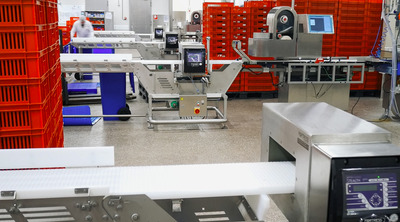
“Food safety and cleaning efficiency are crucial for our consumers’ needs. Given that we work with meats, vegetables and cooking oils, all our equipment must be easy to clean and disinfect,” said Huuskes’ Convenience Manager Geert Dimmendaal.
Although hygienic design is crucial, equipment should also be practical for routine operations, Whyte affirmed. “Fortress Technology recommends that processors achieve an optimal balance between hygiene and functionality, so that design decisions support serviceability, cleaning effectiveness and production uptime without introducing undue complexity. All of this requires operation-wide engagement and ensuring personnel are fully trained on all aspects of sanitation protocols and the latest and most up-to-date SSOPs.”
A three-level strategy for preventing moisture 'drift' in food production
Controlling moisture in food production is critical because even relatively small changes can...
Digital Memosens technology for pH measurments
In food processing, pH measurement is rarely just about obtaining a number.
Bottling line for resealable aluminium beverages
A family-owned beverage producer and contract bottler in Germany required a line for its new...