Shaping the future using holistically designed beverage lines
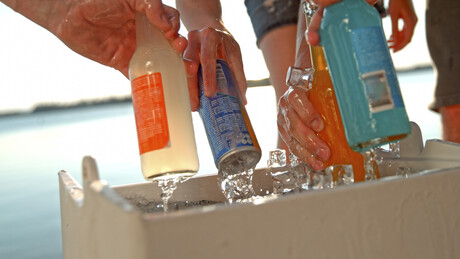
Declining beer sales and changes in consumer habits are demanding a strategic realignment of the beverage industry worldwide. The KHS Group explains how beverage producers can shape this transition.
The dynamic shift in the market is shown in the figures: while beer sales are declining worldwide, new growth opportunities are arising away from this classic area of the beverage industry. In Germany alone, beer sales in 2025 fell below the 80-million-hectoliter mark for the first time.
This shifting trend is prompting an increasing number of traditional breweries to expand their portfolio. Some companies are expanding their portfolios to include new categories such as alcohol-free beers, flavoured water, soft drinks or ready-to-drink food products.
“The change in our industry won’t just happen at some point — it’s already in full swing,” said Tobias Wetzel, CSO of the KHS Group. “Changing consumer habits demand maximum flexibility. Today, what matters is no longer the performance of individual machines, but that of the entire production line. This is increasingly becoming a strategic success factor for beverage producers.”
Using its holistic system expertise, KHS can help beverage producers transform established production structures into flexible production environments — across all beverage and container segments. One key aspect is to use machines as components that are seamlessly integrated into an aligned complete system that is designed to minimise unplanned downtime and improve overall equipment effectiveness (OEE).
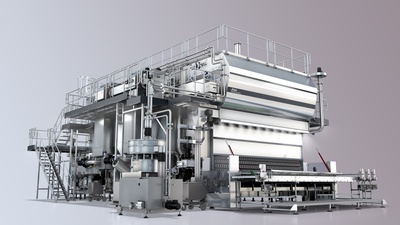
The Innoclean Cascade D bottle washing machine is a prime example in this regard. The double-end generation was developed with a focus on resource efficiency and features modern ECO carrier 2.0 bottle pockets, enhanced label discharge and a smaller bath volume coupled with a high standard of hygiene. The optimised heating concept provides simplified maintenance and cleaning as well as better accessibility. The compact machine also has a footprint that is around 10% smaller than comparable systems.
The holistic line approach taken by KHS is also evident with regard to cans. KHS and Ferrum Packaging AG have combined their expertise in filling and closure technology with the SmartCan Eco system to achieve outputs of up to 136,000 cans per hour. Thanks to precise flow metering, a smaller hygiene area and optimised container handling, the system is also suitable for processing thin-walled lightweight cans.
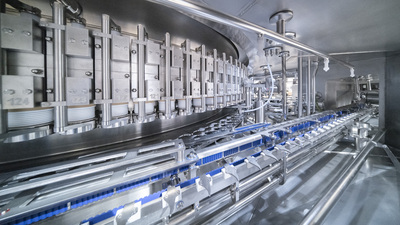
Today, KHS already supports beverage producers with the development of new container and packaging concepts. In future, this support will begin at an even earlier stage. This is because the way is often paved for the long-term success of a production site before the actual investment decision is made. Based on the initial vision, the focus is therefore increasingly turning to fundamental questions about the strategic orientation and future viability of production structures.
KHS Group will be exhibiting its solutions at this year’s BrauBeviale in Nuremberg from 10–12 November.
58% of food manufacturers report less productivity, research finds
Argon & Co research found that Australian food and beverage workers were still doing a lot of...
Humidification solution for Tasmanian Botanics
Australian medicinal cannabis producer Tasmanian Botanics required a solution to control humidity...
How AI is changing the way food and beverage manufacturers prevent and manage recalls
Businesses that stand to benefit the most will be those with all their data in one place,...