From bottleneck to backbone: rethinking water in F&B manufacturing
For decades, water systems in food and beverage plants were expected to do one thing well: stay out of the way. As long as production remained uninterrupted and discharge permits were met, few operators gave much thought to what happened between intake and outfall. Water entered the facility, supported production, and left as wastewater to be treated and discharged.
Today, that equation is changing
Across Asia–Pacific, manufacturers are navigating a convergence of challenges that extend well beyond the treatment plant. Water scarcity is affecting resource availability in many regions, elevating water security from an operational concern to a strategic business issue. Rising energy costs are placing additional pressure on operations. Environmental regulations continue to tighten, and the growing scrutiny from customers, investors and regulators reflects a wider concern for environmental security alongside sustainability performance.
In this environment, water is no longer simply a utility. It is becoming a strategic variable that influences production continuity, operational performance and long-term competitiveness. As a result, leading manufacturers are beginning to rethink the role of water systems. Rather than viewing them as isolated assets designed solely for treatment and compliance, they now see them as integrated components of a circular resource strategy where water is treated, recovered and returned to productive use rather than discharged and replaced.
Water quality starts before production begins
Many discussions around industrial water management focus on wastewater. Yet for many manufacturers, the challenge begins much earlier, with the quality and consistency of incoming water itself.
Variations in source water can affect everything from ingredient consistency and cleaning processes to utility performance and final product quality. As water sources become more vulnerable to environmental and climatic fluctuations, ensuring consistent feedwater quality is becoming a critical consideration for manufacturers seeking predictable production outcomes.
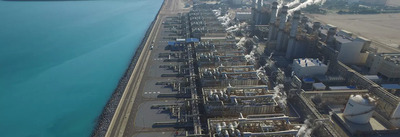
A desalination and salt production plant in Serang City, Indonesia, illustrates this challenge. To produce food-grade salt from seawater, the facility employs a treatment train combining ultrafiltration, nanofiltration, reverse osmosis, osmotically assisted reverse osmosis and thermal systems. By progressively conditioning and concentrating the feedwater, the plant maintains consistent performance despite changing seawater conditions, demonstrating the importance of controlling water quality at the intake of critical production processes.
Managing water effectively, however, does not end once production begins. Some of the most complex challenges emerge at the other end of the process, where wastewater volumes and contaminant loads continue to rise.
Wastewater is becoming part of the resource equation
Historically, wastewater treatment was designed primarily to achieve compliance. Today, manufacturers are asking a different question: how can treatment systems support wider operational objectives while managing more complex waste streams?
The challenge is particularly evident in dairy processing, where effluent streams from multiple production lines can vary significantly in quality. At an integrated dairy facility in Australia producing milk powder, butter and lactose, an existing dosing program could not respond quickly enough to these fluctuations, resulting in higher charges for exceeding governmental effluent disposal restrictions and excessive chemical consumption to maintain pH. Veolia’s assessment pointed to pH management itself as the source of a compounding chemical burden. Switching to a liquid polymeric coagulant capable of operating at near-neutral pH addressed this directly, while an automated control system adjusted dosage dynamically to remove the lag that had caused exceedances. The result: improved effluent quality, reduced sludge disposal costs, and an 18% reduction in effluent disposal charges — a net annual saving of US$122,710.
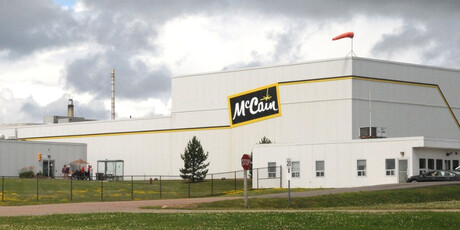
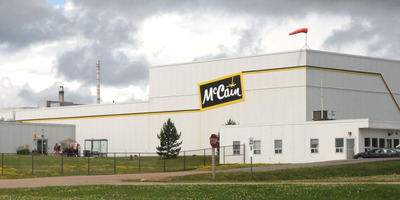
At McCain’s frozen potato processing plant in Gujarat, India, wastewater became part of a broader resource recovery strategy. Through a treatment train incorporating upflow anaerobic sludge blanket (UASB), membrane bioreactor, reverse osmosis and thermal systems, the facility now achieves approximately 98% water recovery while generating biogas to fuel steam production onsite.
The significance lies not only in the technologies themselves, but in the shift they represent: water, wastewater and energy are no longer separate operational considerations, but interconnected resource streams capable of generating value across the facility.
Reuse is becoming part of long-term water strategy
As freshwater availability comes under growing pressure in many regions, that mindset is encouraging manufacturers to look beyond recovery alone and consider how treated water can remain in productive use for longer — a shift that is making reuse a core component of long-term water security strategies.
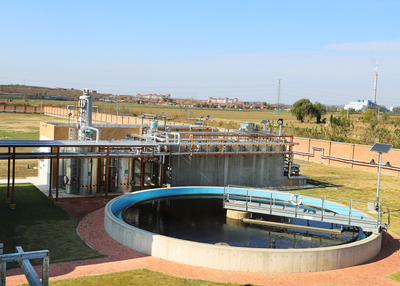
Nestlé’s facility in Qingdao, China, demonstrates how this transition is taking shape. Through a multi-barrier treatment process incorporating membrane bioreactors (MBRs), ultrafiltration, reverse osmosis and disinfection technologies, treated water can be reused for utilities and production-related applications. Rather than viewing wastewater as a stream to be discharged, the project reflects how manufacturers are increasingly looking at how treated water can remain within the operational cycle for longer, reducing freshwater demand while supporting production continuity.
As climate variability, regulatory expectations and resource pressures continue to evolve, reuse is likely to play a larger role in long-term water strategies across the food and beverage sector.
From utility to operational advantage
Food and beverage manufacturing occupies a unique position in the industrial landscape: it produces what communities depend on daily. That makes water security and environmental security not just business considerations, but conditions of the sector’s social licence to operate. Water systems in food and beverage manufacturing are no longer confined to treatment and compliance, they are becoming integrated with production planning, resource recovery and sustainability strategy.
For Veolia, this integrated perspective sits at the heart of ecological transformation: bringing together expertise across water, waste and energy to help customers depollute, decarbonise and regenerate resources, building more resilient operations along the way.
Water systems are no longer infrastructure that simply supports production. As they become more closely integrated with operational performance, resource efficiency and resilience, the question for manufacturers is no longer whether water systems can support production, but how much value they can create across the operation — and how reliably they can protect it.
Lone Star Bakery automates its dessert production line
When a new 'cheesecake in a cup' dessert was a success, Lone Star knew it was time to...
Predictive maintenance delivers savings for soft drink maker
An AI-based condition monitoring solution has been used to prevent downtime, and save bottles and...
Shaping the future using holistically designed beverage lines
Declining beer sales and changes in consumer habits are demanding a strategic realignment of the...