UV light technology to curb viral transmission in poultry environments
Widespread bird flu outbreaks worldwide underscore the urgent need for scalable, sustainable disinfection solutions to curb viral transmission in poultry environments and safeguard global food supply chains and public health.
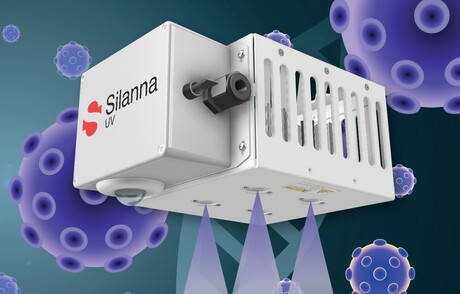
The Silanna UV ultraviolet LED is designed to inactivate multiple H5N1 avian influenza virus strains within seconds, according to recent research by scientists at the University of Siena. The research showed strong viral reduction of up to 99.999% with Silanna’s 235 nm Far Ultraviolet C (UVC) LEDs.
Avian flu has not only disrupted agricultural markets but also food production. Earlier this year, H5N1 outbreaks hit global egg production, leading to shortages and sharp price increases. The virus’s ability to infect humans and other animals has heightened concerns worldwide.
The University of Siena revealed the research results for the product developed by Australian company Silanna during MEDICA 2025, a medical trade fair in Düsseldorf, Germany, at the end of November 2025. The presentation highlighted the Far-UVC LEDs’ strong antiviral performance and the broader implications for Far-UVC technology in health, safety and sanitation.
Unlike traditional 254 nm mercury lamps, far-UVC light (200–240 nm) is considered biologically safe within regulatory limits. It cannot penetrate the outer layers of skin or eyes, enabling continuous disinfection in occupied spaces such as hatcheries, food-processing facilities and clinical environments. Researchers also suggest microbes are less likely to develop resistance to far-UVC than to conventional antibiotics.
The University of Siena’s Department of Molecular and Developmental Medicine oversaw the joint research, conducted at a Biosafety Level 3 (BSL-3) laboratory in Italy in 2025. The test results confirmed that 235 nm LED irradiation achieves multi-log (up to 99.999%) viral reduction within seconds. These findings position far-UVC LEDs as a possible next-generation biosecurity solution, reducing viral contamination risks in industrial and public health settings.
Air Liquide to build industrial and medical gas plant in NSW
The plant is being built to enhance the local industrial and medical gas supply across Australia...
Fat recovery method for industrial ice-cream waste
Penn State researchers have developed a simple method that could help with the recovery and reuse...
Blue-light approach to reducing Campylobacter in poultry
The novel technique developed in the UK to reduce surface contamination on poultry products is...