Aussie Barramundi farm achieves certification for responsible aquaculture
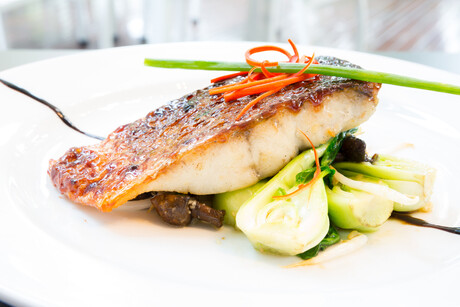
Aquaculture Stewardship Council (ASC) has announced that Humpty Doo Barramundi, based in the Northern Territory, has achieved ASC certification. This is said to be the first time an Australian barramundi farm has met the globally recognised ASC standards for responsible aquaculture.
ASC is an independent non-profit organisation that sets global standards for responsible farmed seafood. Its certification program includes environmental and social requirements which are designed to drive continuous improvement in aquaculture practices.
“Humpty Doo Barramundi has demonstrated that Australian producers can meet the highest standards for responsibly farmed seafood,” said Ellie Dixon, ASC Market Development Manager Australia.
To meet ASC standards, farms undergo a rigorous third-party assessment, where they must demonstrate a comprehensive commitment to responsible farming that protects the environment, safeguards fish welfare, and supports the wellbeing of surrounding communities.
This includes maintaining excellent water quality, minimising waste, protecting local biodiversity, social, welfare and health management practices. Farms are also required to show full traceability of feed and engage transparently with local stakeholders.
“We are proud to be the first Australian barramundi farm to achieve ASC certification,” said Dan Richards, owner and CEO Humpty Doo. “Strong environmental practice and high-quality aquaculture have guided our family business for more than 30 years and this certification confirms that our approach meets the world’s most trusted benchmark for responsible farming.”
Humpty Doo Barramundi’s saltwater wetland wastewater treatment system is a cornerstone of the farm’s commitment to sustainable practice and is one way that it ensures it meets ASC standards. Designed to mimic the natural tidal and mangrove environments in which barramundi thrive, the system recirculates and treats water through a closed loop wetland network, resulting in low impact to natural waterways while transforming nutrients into plant and algal growth for onsite use rather than pollution. This nature-based solution is designed to support fish health, production efficiency and ecosystem protection.
Air Liquide to build industrial and medical gas plant in NSW
The plant is being built to enhance the local industrial and medical gas supply across Australia...
Fat recovery method for industrial ice-cream waste
Penn State researchers have developed a simple method that could help with the recovery and reuse...
Blue-light approach to reducing Campylobacter in poultry
The novel technique developed in the UK to reduce surface contamination on poultry products is...