Why production flexibility matters to Australia's food and beverage manufacturers
By Darren Butler, Vice President of Industrial Automation, Pacific Zone, Schneider Electric
Tuesday, 22 September, 2026
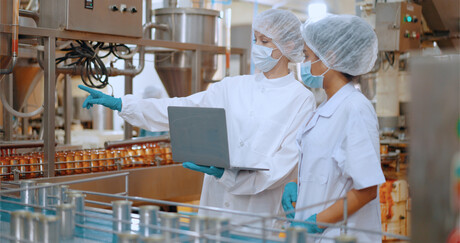
Australian food and beverage manufacturers are producing more product variants in shorter runs as customer and retailer requirements continue to change.
For many producers, responding to those shifts requires changes to recipes, packaging formats and production sequences. The engineering work behind those changes can be costly and time-consuming, particularly in plants with aging infrastructure and limited access to specialist skills.
Manufacturers need to respond to changing market demand without adding unnecessary engineering time or compromising plant performance. Energy Technology can support that goal by bringing automation, digital systems and energy management into a common operating environment.
Production systems therefore need to accommodate frequent change while maintaining reliability and managing energy use effectively.
Australia’s food and grocery manufacturing sector generated $173 billion in turnover in 2023–24 and supports nearly 300,000 jobs, making it the country’s largest manufacturing sector. Given the sector’s scale, the way its factories are engineered directly affects Australia’s manufacturing competitiveness.
The engineering burden behind production changes
Automation is already embedded across much of food and beverage production, but its flexibility varies considerably between plants and production lines.
The next productivity opportunity may come from reducing the effort required to modify existing systems.
In many plants, control logic remains tied to particular hardware or individual production lines. Introducing a recipe or packaging change can require engineers to rewrite logic, retest the application and recommission equipment before production resumes.
Repeated across a site or network, that work can delay product launches and make successful improvements difficult to replicate.
Production changes can also affect utilities and energy demand. A system that gives engineering teams visibility across automation and energy use can help them understand those effects before a change is deployed more widely.
A different approach to automation
Open, software-defined automation addresses this challenge by decoupling software from hardware.
Manufacturers can then reuse proven applications across compatible assets and sites, reducing the need to treat each production change as a separate engineering project.
This approach can reduce repetitive engineering and shorten the path from testing to production.
It also allows plants to update individual applications progressively while retaining equipment that continues to perform reliably.
Food and beverage manufacturers need automation that can keep pace with changing production requirements. Open, software-defined automation allows engineering teams to reuse and adapt control applications, helping plants modernise without replacing functioning equipment unnecessarily.
Where Energy Technology fits
Flexible automation is one part of a wider change in the way manufacturers manage production and energy.
A production decision can alter equipment loads, utility demand and energy consumption. Connecting operational and energy data gives manufacturers a clearer view of those trade-offs.
An open automation architecture can make relevant data available across systems and give engineering teams a consistent basis for evaluating improvements.
Industrial software adds context to that data. Schneider Electric’s portfolio, including AVEVA, can connect information from production, maintenance, utilities and energy systems so teams can assess how a proposed change may affect the wider facility.
This is the practical role of Energy Technology: linking energy management with automation and digital systems so operational improvements can be assessed against productivity, reliability and energy-performance requirements.
Engineering for change
Food and beverage manufacturers can improve flexibility progressively, starting with the applications or lines that create the greatest engineering burden.
Early wins can then be extended to other lines and sites, so the same engineering effort doesn’t need to be repeated each time.
For Australian manufacturers managing shorter production runs and tighter operating margins, competitive advantage will depend on how readily they can adapt the technology they already have.

Humidification solution for Tasmanian Botanics
Australian medicinal cannabis producer Tasmanian Botanics required a solution to control humidity...
How AI is changing the way food and beverage manufacturers prevent and manage recalls
Businesses that stand to benefit the most will be those with all their data in one place,...
Lone Star Bakery automates its dessert production line
When a new 'cheesecake in a cup' dessert was a success, Lone Star knew it was time to...