Seaweed: a potential solution for increasing food demand
Climate change is increasing food production pressure, along with impacts generated by droughts, floods and heatwaves. This, combined with the fact that world food production needs to increase by 70% to feed the world population by 2050, makes it clear that alternative food sources and production methods need to be explored.
Seaweed provides a novel, alternative sustainable food source and bioproducts for human and animal consumption. According to the FAO, seaweed culture has grown faster than any other marine food production sector in the last 20 years, experiencing an annual global growth rate of 7.7% with production exceeding 35 million tonnes in 2020. The challenge is to learn how to cultivate the ocean using an ecological approach.
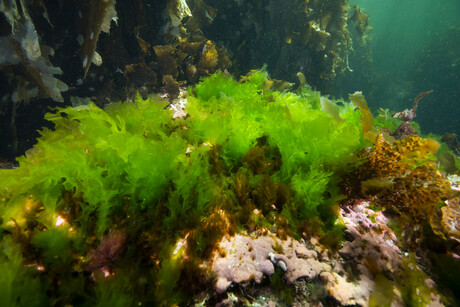
Ulva is considered one of the most usable seaweeds, with applications in food, agriculture, pharmaceuticals, cosmetics and biotech. Ulva farms can produce a yield several times higher than that of terrestrial plantations and it can be grown using a variety of methods. The most common method is aquaculture, which involves cultivating the seaweed in a controlled environment. Aquaculture is a sustainable method, requiring minimal resources and producing minimal waste.
The European Cooperation in Science and Technology (COST) is a funding organisation for the creation of research networks, called COST Actions. The COST Action Tomorrow’s ‘Wheat of the Sea’: Ulva, a model for an innovative mariculture (SeaWheat) aims to address questions and concerns regarding the use of seaweed, particularly Ulva, by working to acquaint traditional European diet and taste with Ulva as a new, sustainable and safe food item. Its aim is to step towards a green economy based on Ulva mass production and its utilisation within the European community and beyond.
The active involvement of industry players is needed to further explore future commercial applications and the economic potential of Ulva.
“Overall, embedding industry participation in Ulva research can help to ensure that the research outcomes are relevant, useful and impactful for industry stakeholders, while also facilitating knowledge transfer and leveraging resources to support the research project,” said Karina Balina, Science Communication Coordinator for SeaWheat.
The good, the bad and the ugly food buying habits
A recent study with Charles Darwin University (CDU) examines how consumers' religiosity...
Small changes for manufacturing healthier food
Research in the UK suggests that food and drink manufacturers could improve the sustainability...
Flavour-first technology for fruit development
A new flavour wheel tool developed by Queensland researchers will allow consumer taste...