Closing the sensory gap with no- and low-alcohol wine
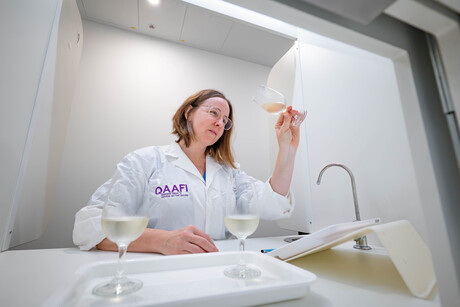
Researchers at The University of Queensland are on a quest to identify key aroma compounds that could make no- and low-alcohol (NoLo) wine more attractive to drinkers.
Queensland Alliance for Agriculture and Food Innovation (QAAFI) PhD candidate Huanhuan Li said there was a substantial sensory gap between NoLo and traditional wines, with aroma a major contributor to both quality and acceptance.
“Reducing alcohol content changes a wine’s sensory characteristics considerably,” Li said.
“It seems that important volatile aroma compounds are lost or altered during the dealcoholisation process.
“Combining chemical analysis with sensory evaluation is helping us determine which compounds are reduced or missing in NoLo wines.”
QAAFI recruited regular white wine drinkers to determine if adding compounds identified by chemical analysis to NoLo wines improved the perceived vinosity of the drinks.
“Vinosity, or wine-likeness, is an important concept in our research because it describes how closely the aroma of a NoLo product resembles that of conventional wine,” Li said.
“We needed people familiar with white wine and what a typical white wine should smell like.
“We asked them to assess whether restoring the aroma compounds increased the perceived wine-likeness, as well as fruitiness and overall consumer acceptance of the NoLo wine.”
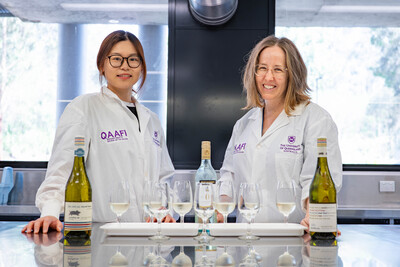
Following the chemical and sensory analysis, microbial and fermentation strategies are being used to try to naturally increase the production of the aroma compounds in NoLo wine.
Li is exploring whether selected non-Saccharomyces yeasts, which can produce less ethanol while generating desirable aroma compounds, could be used to establish a natural flavour-restoration platform for NoLo wines.
“Rather than simply adding flavour compounds back into the wine, our approach is to screen yeast strains with desirable fermentation and aroma-producing properties and use them in a controlled natural secondary fermentation,” she said.
“Ultimately, we hope this approach can improve the vinosity of NoLo wines.
“The wine-drinking consumers provided an important link between our flavour chemistry and fermentation research: first identifying what is missing, then confirming what matters to consumers, and finally finding biological ways to restore it.”
Professor Heather Smyth, who leads the research, said consumer interest in NoLo wines had grown rapidly in recent years.
“Driven by health and wellness trends and a desire to moderate alcohol consumption, there is increasing demand for products that deliver the flavour and aroma of traditional wine without the alcohol,” Smyth said.
This research was funded by Wine Australia and involves the Australian Institute for Bioengineering and Nanotechnology.
pladis program plans to help with a snacking reshape
The second year of pladis's Accelerator Programme is now open for food-tech startups that can...
Scientists identify a novel peptide derived from red alga
Seaweed is commonly used as an ingredient in many food products, but researchers have now...
GLP-1 moments reshaping food and beverage innovation
IFF's latest report provides a roadmap of 10 moments that could help manufacturers design...