Scientists identify a novel peptide derived from red alga
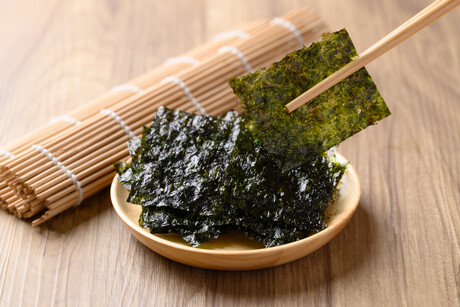
Seaweed is a dietary staple found in sushi, rice wraps and ramen toppings. Commonly known as nori in Japan and gim in Korea, red seaweed is especially popular across Asia. Yet, despite its widespread consumption, many of its nutritional benefits remain poorly understood. Now, research led by Hokkaido University scientists has discovered that digestion of a particular red alga releases a peptide, or a small fragment of protein, with potential benefits for blood glucose control and diabetes prevention. The study was published in Food Bioscience.
Japan’s northernmost prefecture, Hokkaido, is home to cold coastal waters where an edible red seaweed with soft, frilly fronds and a distinctive taste grows abundantly. Researchers subjected this seaweed, known as dulse (Devaleraea inkyuleei), to an artificial digestion process in the laboratory, mimicking how it is digested in the human body. They found that a novel peptide called EVYR, made up of just four amino acids, is released during the process and could help regulate blood glucose levels.
When we eat, our blood glucose level rises, prompting the pancreas to release insulin. Insulin helps cells absorb glucose from the blood and use it to produce energy. Several proteins and enzymes are involved in this process. EVYR works by inhibiting an enzyme called dipeptidyl peptidase-IV (DPP-IV), which breaks down hormones that stimulate insulin release. By inhibiting this enzyme, EVYR helps maintain the activity of the hormones and allows them to stimulate insulin release for longer.
“Seaweed has long been part of our diets, and the new research tells us a little bit more about its potential effect on our body,” said Associate Professor Yuya Kumagai of Hokkaido University’s Faculty of Fisheries Sciences. “The discovery of EVYR opens up new possibilities for using red algae to develop functional foods that support blood glucose control.”
Using an analytical technique called liquid chromatography–tandem mass spectrometry, the team measured how much EVYR was released during dulse digestion. This enabled them to quantify a biologically active peptide generated during the digestion of algae. The team also found that other red algae could potentially release EVYR during digestion, based on comparisons of protein sequences across different species and computer simulations.
The findings add dulse to a growing list of food sources, which includes fish, milk and soybeans, all of which contain peptides with potential blood glucose-regulating properties. Further studies will help determine whether the amount of EVYR released during dulse digestion is sufficient to influence blood glucose levels in the human body.
GLP-1 moments reshaping food and beverage innovation
IFF's latest report provides a roadmap of 10 moments that could help manufacturers design...
The good, the bad and the ugly food buying habits
A recent study with Charles Darwin University (CDU) examines how consumers' religiosity...
Small changes for manufacturing healthier food
Research in the UK suggests that food and drink manufacturers could improve the sustainability...