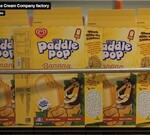
Yili Group builds ice-cream factory hub

Yili Group has launched the first phase of its Yili Indonesia Dairy Production Base, which will form a dual operation centre for Indonesia and Thailand.
Upon completion of the second phase, the company’s first self-built factory is set to become the country’s largest ice-cream factory with a daily production capacity of four million ice-cream products.
The facility has been established thanks to the popularity of its Joyday ice cream across Indonesia. The Indonesia-based hub aims to speed up Joyday’s product manufacturing, R&D and marketing efforts, with more new products to come for the local customers.
The facility has adopted cutting-edge technology and equipment, including the Internet of Things and big data analytics, to build an innovative and smart factory. The production base integrates advanced digital technologies throughout its entire production chain. Robotics solutions are introduced to provide automated packing, palletising and warehousing.
The construction of infrastructure and buildings has been undertaken strictly in line with Yili Group’s global quality management standards. To date, the factory has already passed the ISO22000, HALAL and BPOM certifications and been rated A grade by the LPPOM MUI food and drug certification agency in Indonesia.
As part of its efforts to build a sustainable and environmentally friendly production facility, Yili Indonesia Dairy has built a wastewater treatment system with a daily treatment capacity of 2800 tons. Reclaimed water is then used for the irrigation of plants in the factory.
To ensure high levels of visibility and transparency, the site will be open to the public whenever the factory is in full operation, and consumers can watch the whole production process as it unfolds.
NewCold's $200m expansion of cold storage facility in Vic
As frozen food demand grows across Australia, NewCold has expanded its cold storage facility at...
Lactalis plans to close dairy factory in Gippsland, ADF comments
Australian Dairy Farmers said the news about the dairy factory closure in Victoria reflects...
Nestlé Purina PetCare to build integrated pet food plant in Italy
In order to meet growing demand for pet food, Nestlé Purina is investing approximately...