Why 2026 growth won't come from price rises: inventory systems back in focus

Navigating a year of cautious optimism
Australia’s latest round of first-quarter outlook reports, from Queensland Business Chamber, Business NSW and Business Victoria, paint a mixed picture for small business in 2026.
Rising costs and persistent inflation continue to weigh heavily on confidence. At the same time, population growth, technology investment and steady consumer spending are driving cautious optimism.
The common theme is that 2026 will be a year of stabilisation, not rapid expansion. This is especially true for sectors exposed to discretionary spending, including hospitality, premium grocery, and lifestyle products.
Efficiency over price rises
In an environment of caution, maintaining consumer trust and demand will be just as important as good business oversight in 2026, says Business Victoria.
As a result, the report says, “improving efficiency and productivity will be critical” to help manage costs and support margins without relying solely on price increases.
That leaves many operators asking a practical question of where efficiency gains can be found without major capital investment?
The inventory blind spot
For many food processors, the answer may lie in better inventory management.
Entry-level accounting systems such as QuickBooks or Xero often provide a starting point for growth, with basic stock tracking. But as operations scale, so does the opportunity to unlock value through more sophisticated systems.
This is where purpose-built inventory software systems like Queensland-based Fishbowl are gaining traction by offering a cost-effective step up without the price tag of full enterprise platforms.
Simon Jupe, Managing Director of Fishbowl APAC, says many businesses don’t realise how much value is locked inside their inventory processes.
“This year’s forecasts show businesses are looking for smarter ways to manage costs without pushing prices onto customers,” Simon says. “Inventory is one of the biggest opportunities. The right system can unlock efficiencies in production, picking, packing, and even pricing.”
Case study: Pacific Valley Dairy
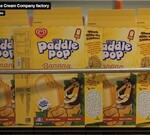
For Fishbowl client, ice cream manufacturer Pacific Valley Dairy, that opportunity became clear when after three years of operations they had outgrown their QuickBooks accounting system to manage their operations.
“QuickBooks wasn’t enough for Pacific Valley Diary,” Simon explains. “They couldn’t properly track raw materials, finished goods, or manage distribution across hundreds of locations. It became a logistical challenge.”
From cost concern to operational backbone
When Pacific Valley Dairy’s Accounting Manager, Randy Schiefer, transitioned to Fishbowl, his initial focus was on controlling software costs.
“Fishbowl pretty much runs our whole business,” Randy says. “As a small company, we couldn’t justify spending hundreds of thousands on a new system. Fishbowl gave us the functionality we needed without that cost.”
Production visibility and control
Pacific Valley Dairy produces a wide range of ice cream mixes, each requiring precise handling of raw ingredients. With Fishbowl, the business now manages detailed bills of materials and tracks every input through production.
“We create a work order for each batch we produce,” Randy says. “Raw ingredients are issued to production, and once the batch is complete, the finished product is added to inventory. Fishbowl tracks everything and works really smoothly.”
This level of visibility has improved accuracy, reduced waste, and strengthened compliance, which is a critical factor in the highly regulated dairy sector.
Pick, pack, deliver with precision
Distribution was another major pressure point for Pacific Valley Dairy that delivers directly to stores using its own fleet, with each truck servicing up to 25 locations per run.
Fishbowl introduced a simple but powerful improvement that sequenced pick-and-pack workflows.
“We can now generate pick labels in delivery order,” Randy explains. “The last stop is picked first and packed at the back of the truck. By the time we’re done, the truck is loaded in reverse order of delivery. It makes unloading fast and efficient.”
The result is reduced handling time, fewer errors, and smoother deliveries.
Managing complex pricing structures
Like many food processors, Pacific Valley Dairy operates across multiple customer types, each with different pricing agreements. Previously, this created invoicing complexity and administrative strain.
With Fishbowl, pricing structures are now built directly into the system.
“We have six to eight different pricing structures,” says Randy. “Each chain has its own setup, and we can manage all of it easily. Fishbowl’s made invoicing and receivables much more straightforward.”
A practical path to growth
For Australian food processors navigating a cautious economic climate, the challenge is not just to grow, but to grow sustainably with improvements in operations. For Randy, inventory management emerged as a key lever for growth.
“Fishbowl has really been great in helping us manage our business, and I would recommend it to anyone looking for an enterprise level inventory management solution without the enterprise price tag,” said Randy.
Want more information?
Book a Demo today and find out how Fishbowl can streamline operational efficiencies and scale operations for growth in your business.
Mastering Inventory Management for Food & Beverage Safety, Compliance, and Operational Excellence
Effective inventory management is essential for food and beverage businesses to keep pace with...
AFGC and Federal Government align: Inventory management improvements to weather the storm
Many food processors still rely on systems that were never designed for manufacturing complexity.
Swisslog's multi-temperature automation modernises cold storage and logistics
Australia's food and beverage manufacturers are under increasing pressure to manage complex...