Food processors going green without sacrificing profitability

Australian food processors are facing a growing commercial squeeze: major retail and foodservice customers want stronger environmental credentials from their suppliers, while continuing to push hard on price.
New modelling from the Australian Meat Processor Corporation (AMPC) shows Australia’s red meat processing sector could achieve net zero emissions by 2045 without sacrificing profitability.
DETA Consulting, an engineering and energy advisory firm that delivered the project, says the findings offer a practical lesson for food manufacturers more broadly: the order in which businesses tackle decarbonisation can make a significant difference to the cost.
DETA’s Managing Director Jonathan Pooch said businesses should focus on reducing energy demand before committing to more capital-intensive changes.
“Whether you’re processing meat, dairy, beverages or packaged food, the starting point is understanding where your energy is going and what you can do to use less,” Pooch said.
“Fix your efficiency first. Add solar. Then time your fuel transition to when the economics and your capital cycle align. Do it in that order and you can improve the business case at every stage.”
Pooch said the commercial pressure from major customers is real, but reducing emissions doesn’t have to mean taking on unnecessary costs.
“What this modelling shows is that decarbonisation, done in the right sequence, can be a business improvement program — one that reduces operating costs, improves resilience and strengthens the commercial case at the same time.”
The AMPC Decarbonisation Pathways Update, published in September, identifies significant opportunities for red meat processors to reduce emissions while improving energy performance.
The modelling highlights that:
- Onsite energy intensity has fallen 30% to its lowest level since 2010, demonstrating the progress already possible through improved energy performance.
- Solar adoption has increased 400% since 2020 but still supplies less than 1% of the sector’s total electricity consumption.
- An estimated $1.2 billion in investment across the processing sector would be needed to support the transition to net zero.
- Electricity accounts for 31% of processors’ energy use but 52% of their emissions. Thermal energy represents more than half of the sector’s energy consumption, with steam used in rendering accounting for about 70% of thermal energy demand.
Pooch said reducing energy demand before electrifying processes could also reduce the cost of the infrastructure needed to support the transition.
“If you reduce your energy demand through efficiency before you electrify, you need a smaller, cheaper system,” he said.
“You get rewarded for efficiency twice — first in reduced operating costs, and again in lower capital expenditure when you invest in the next stage. That’s the business case many processors need to look at more closely.”
A project at ANZCO Foods’ Canterbury processing site highlights the potential savings from improving energy efficiency before investing in new infrastructure.
DETA designed a system to recover heat from the site’s rendering plant and use it to preheat water, alongside increased hot-water storage capacity.
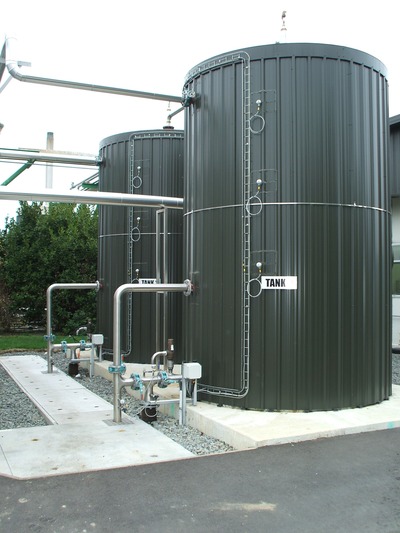
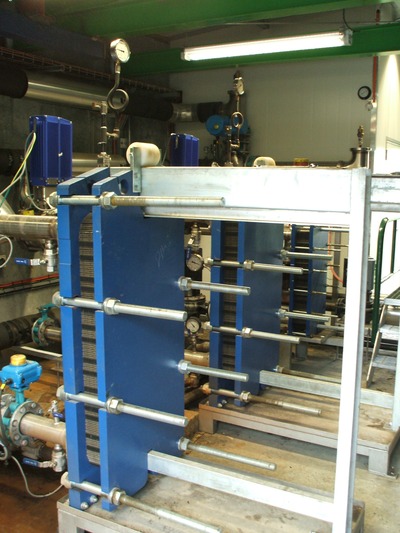
The project saves 8 GWh of energy annually, equivalent to 9.4% of the site’s energy consumption, and delivers reported annual cost savings of more than $1 million.
“Before investing in new energy supply infrastructure, businesses should understand where energy is being wasted and whether it can be put to better use,” Pooch said.
“Reducing demand first can lower operating costs now and reduce the size and cost of the investments needed later.”
Pooch said the benefits of energy projects could extend beyond energy savings to improved plant resilience, reduced maintenance and better health and safety outcomes from measures such as pipe insulation.
“These are not only energy improvement projects, but also business improvement projects,” he said.
“A business case built only on energy savings can undersell the true return.”
Pooch said for processors unsure where to start, the priority should be to establish a clear picture of current energy use, identify practical efficiency improvements and build a staged plan around the facility’s needs.
“Some efficiency measures can pay back in months, not years,” he said.
“If you haven’t started, understand where your energy is actually going and fix what’s wasting it. The capital-intensive steps can become significantly cheaper and more financeable once you’ve done that groundwork.”
A video explainer can be viewed here:
Gas is becoming a business risk for Australia's food sector
In this opinion article, Schneider Electric outlines how electrification could provide a viable...
Food ingredient plant implements an electrification strategy
Schneider Electric, AVEVA and Royal Avebe have demonstrated a practical example of industrial...
Distillery cuts energy bills by 80%
A solar installation has delivered 100% renewable operations and a reduction in energy bills for...