Gas is becoming a business risk for Australia's food sector
By Lisa Zembrodt, Principal and Senior Director, Pacific Zone and Carlo Boghdadiis, Enterprise Sustainability Solutions Manager for Schneider Electric’s SE Advisory Services.
Wednesday, 05 August, 2026
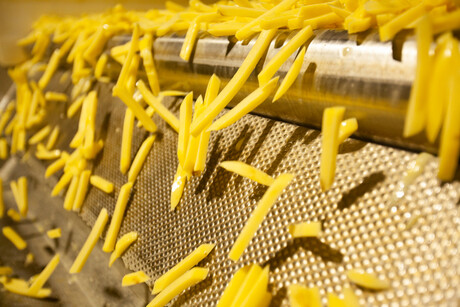
Gas has long been the manufacturing workhorse of Australia’s food sector, producing the heat for processes including cooking, steaming, drying and sterilisation, but what was once a dependable energy source is becoming the industry’s greatest strategic risk.
Gas supplies around 40% of the energy used by Australia’s food and beverage manufacturers. That leaves an industry responsible for almost one-third of national manufacturing output dependent on a volatile commodity, at a time when energy security, operating costs and emissions are receiving unprecedented scrutiny.
The industry needs to begin treating gas dependence as a business risk to be progressively reduced. There is an available and more energy-efficient answer to this dilemma: electrification.
Pressure on countries and companies to decarbonise and meet emissions targets will only increase. Ahead of November’s COP31, its President of Negotiations, Australian Energy Minister Chris Bowen, has announced a proposed global target to increase electricity’s share of energy demand from 20% today to 35% by 2035.
Our food sector should be supported to lead the way.
A positive is that much of the heat used in food and beverage production is in the low- to medium-temperature range, so it can be supplied using electric technologies commercially available today.
Industrial heat pumps are a prime example. Rather than generating heat by burning fuel, they capture heat from sources such as refrigeration systems, process water or exhaust streams, and raise it to a useful temperature. A well-designed system can deliver three or four units of heat for every unit of electricity consumed.
That is not merely fuel switching. It is a fundamental improvement in energy productivity, cutting costs along the way.
Other pathways for electrification include mechanical vapour recompression, electrode boilers, electric thermal energy storage and infrared or radiant heating. There is no single solution for every factory, but there are now credible electric solutions for a significant portion of the heat used across the sector.
We just need to glance across the Tasman Sea to see Australia is moving too slowly.
In New Zealand, between 2019 and 2022 gas consumption in the food and beverage sector fell by 21%, while electricity use increased by only 7%, according to a study by the Institute for Energy Economics and Financial Analysis.
That disparity reflects the efficiency of electric heat pumps; businesses were not simply replacing every unit of gas with a unit of electricity, they were reducing the total energy required.
Government funding helped businesses manage upfront costs, prove the technology, and build confidence.
Australia can learn from that approach. But getting off gas does not begin with ripping out a boiler, it starts with a plan.
A sensible roadmap to a net-zero or fully electrified site sequences the work so each step pays for the next. Measure the site’s energy and heat loads first, capture efficiency and heat-recovery wins, then electrify the loads that stack up commercially before scaling to the rest.
Efficiency improvements and heat recovery should generally come before investment in replacement generation. Waste heat from refrigeration, air compressors and other processes may be capable of preheating water or supplying another part of the facility.
Once those opportunities have been captured, businesses can electrify the loads with the strongest commercial case and progressively tackle more complex applications. Sequenced properly, each stage can reduce the scale and cost of the next.
Electrical capacity must be considered early. Electrification may require upgraded connections, switchboards, or distribution equipment. But manufacturers should also consider how onsite solar, battery or thermal storage, renewable electricity procurement, and intelligent energy-management systems can work together.
An electrified facility should not be designed as a collection of isolated assets. Heating, cooling, storage, generation and production schedules should operate as an integrated, digitised energy system.
In Australia, the Australian Renewable Energy Agency (ARENA) has begun throwing its support behind some of our largest manufacturers to reduce their emissions, with a trial for low emission technologies for process heat.
Participants include McCain Foods, receiving $7.38 million to implement two interconnected heat recovery systems at its Ballarat potato processing site. One will recover high-temperature heat from condensate to decrease boiler demand, while the second captures fryer exhaust heat to produce hot water. Together they are expected to lower the site’s natural gas boiler load by 22%.
Sugar Australia has $4.1 million in funding to significantly reduce emissions at its Yarraville sugar refinery by replacing traditional natural gas evaporators with an electrically driven mechanical vapour recompression system.
Our government should increasingly play its part. Many food manufacturers operate on tight margins and cannot easily justify replacing functional equipment. Targeted co-investment can unlock projects, create local capability and bring down costs.
Electrification should be understood as a way to improve energy productivity, reduce exposure to gas volatility, strengthen operational resilience and cut emissions at the same time.
The technology is ready and the business case is increasingly compelling. The task now is to move from pilots to sector-wide implementation.
For Australia’s food and beverage industry, getting off gas is not only a decarbonisation challenge. It is an opportunity to build a more efficient, competitive and resilient manufacturing sector.

Food ingredient plant implements an electrification strategy
Schneider Electric, AVEVA and Royal Avebe have demonstrated a practical example of industrial...
Distillery cuts energy bills by 80%
A solar installation has delivered 100% renewable operations and a reduction in energy bills for...
Imperfect plums repurposed into new food products
By freeze drying surplus Queen Garnet plums, Nutrafruit has been able to upcycle the fruit into...