Testing beef trim sampling cloths for Escherichia coli O157:H7, STEC, and Salmonella species with harmonised enrichments
Introduction
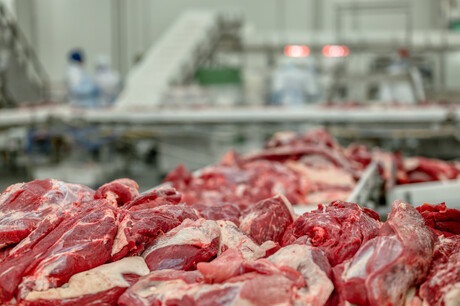
Ensuring the safety of beef trim is paramount to public health and industry compliance. United States Federal Regulations mandate rigorous testing procedures to detect potential contaminants in beef products, prominently focusing on pathogens such as Escherichia coli O157:H7 and non-O157 Shiga toxin-producing E. coli (STEC) serotypes, along with Salmonella species. This includes a zero-tolerance policy for the presence of STEC, including E. coli O157:H7 in beef trim. Although presence of Salmonella in beef trim is permitted, beef product manufacturers are required to monitor and control the presence of Salmonella at their sites and in their products. These stringent regulations aim to prevent foodborne illnesses and uphold the quality standards expected by consumers.
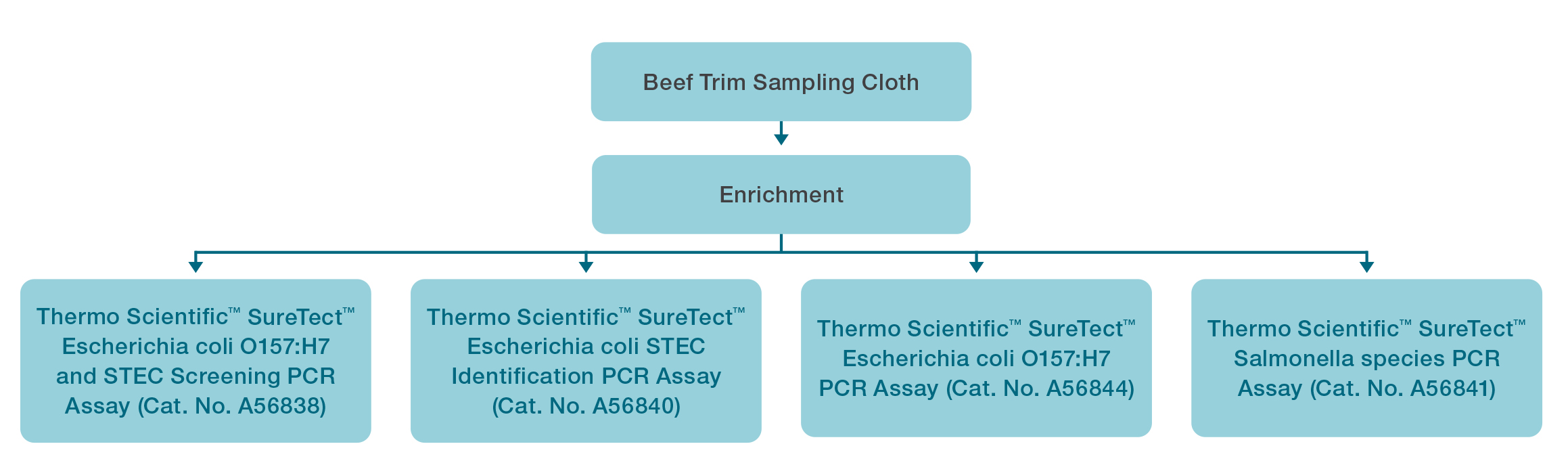
To meet these critical requirements, we offer a comprehensive suite of solutions designed for the rapid and accurate detection of these pathogens from beef trim sampling cloths in as little as ten hours (Figure 1).
The performance of these assays has been verified according to AOAC Appendix J method validation guidelines. The assays are designed to offer high specificity and sensitivity, ensuring dependable results in a timely manner. By leveraging our advanced PCR technology, food manufacturers and relevant laboratories can enhance their testing protocols, protect public health, and maintain compliance with regulatory standards.
Methods of verification
The study was conducted according to AOAC Appendix J method validation guidelines. The SureTect PCR Assays related to STEC and E. coli O157:H7 were compared to the USDA FSIS MLG 5C.03 reference method. The SureTect Salmonella species PCR Assay was compared to the USDA FSIS MLG 4.14 reference method.
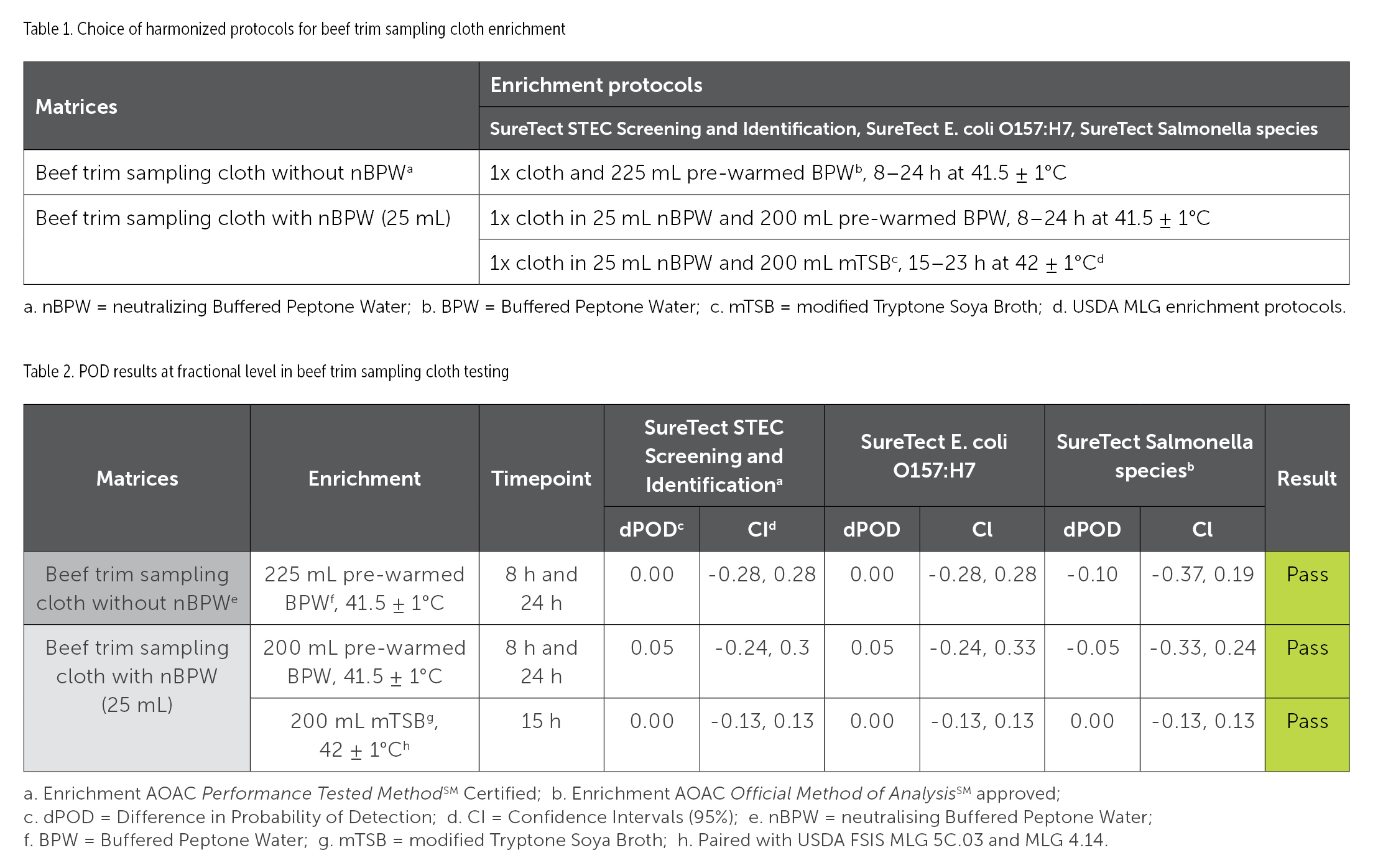
To provide flexibility, beef trim sampling cloths were tested both with and without neutralizing Buffered Peptone Water (nBPW). The enrichment steps for all four SureTect PCR Assays were harmonized to offer end users streamlined protocols to meet their testing requirements (Table 1).
In addition, the sampling cloths were artificially contaminated with both Salmonella and STEC, simulating a worst-case real-world scenario. This methodological approach provided a robust evaluation of the harmonized enrichment performance, ensuring detection of both pathogens is possible, even in a
co-infection scenario.
Study results
The PCR assay workflows met AOAC performance requirements and there were no statistically significant
differences observed when comparing to the gold standard reference methods (Table 2).
Conclusions and significance
Ensuring the safety of beef trim through rigorous testing is crucial for public health and industry compliance. Our comprehensive suite of solutions offer a robust and efficient workflow for detecting E. coli O157:H7, non-O157 STEC serotypes, and Salmonella species from beef trim sampling cloths.
A single sample enrichment for all four PCR assays streamlines the testing process, enhancing efficiency. Additionally, the coinoculation of sampling cloths with both Salmonella and STEC simulates the worst-case real-world scenario, proving method performance and ensuring reliable detection.
The methods meet AOAC acceptability requirements by demonstrating no statistically significant differences in performance compared to the relevant reference method, showcasing their high specificity and sensitivity. The SureTect Escherichia coli O157:H7 and STEC Screening PCR Assay and SureTect Escherichia coli STEC Identification PCR Assay were certified by AOAC Performance Tested MethodsSM for the enrichments described in Table 2, while the SureTect Salmonella species PCR Assay has been approved by AOAC Official Methods of AnalysisSM for the same enrichments.
Furthermore, the simplicity and ease of use of these assays make them ideal for food safety professionals seeking dependable and timely results.
Through advanced PCR technology, Thermo Fisher Scientific aids in safeguarding public health and maintaining compliance with stringent regulatory standards.
Learn more at thermofisher.com/suretect
Robust cable solutions for food and beverage manufacturing
By choosing robust cabling from the outset, food manufacturers can help to protect the...
How Smarter Compressed-Air Monitoring Can Help Food & Beverage Manufacturers Improve Reliability and Efficiency
ELGi's Air~Alert provides food and beverage manufacturers with connected monitoring...
From Manual Weighing to Intelligent Quality Control with METTLER TOLEDO's IND400
Why Today's Manufacturers Can't Afford to Weigh by Guesswork.