Hygienic Design in Practice: Supporting Modern Food Production
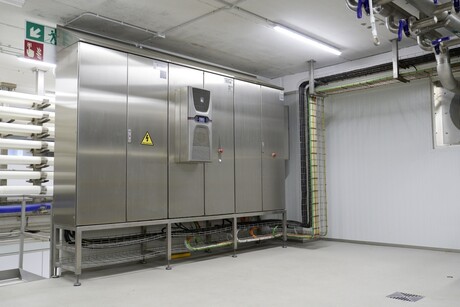
Across Australia’s food and beverage sector, manufacturers are operating under increasing hygiene, audit, and production reliability requirements.
Frequent washdowns, aggressive cleaning agents, and strict food safety expectations place ongoing pressure on electrical enclosures installed throughout production environments. In these conditions, enclosure design directly influences cleanability, contamination control, and the protection of sensitive control technology.
This is why leading manufacturers are looking beyond standard stainless-steel cabinets and specifying enclosure systems designed specifically for hygiene-critical areas.
A Global Example: Liquats Vegetals
Liquats Vegetals, one of Spain’s leading producers of plant-based beverages, supplies products to more than 45 countries and operates under strict EHEDG hygiene standards.
For its production environment, the company required enclosure systems that could support regular cleaning procedures while maintaining reliable protection for control technology over many years of operation.
As Tasio Corachan, Process and Continuous Improvement Manager at Liquats Vegetals, explained:
“When developing production methods, we follow the quality standards of the European Hygienic Engineering & Design Group (EHEDG). We decided some years ago that the components used in production — such as enclosures — must meet EHEDG standards.”
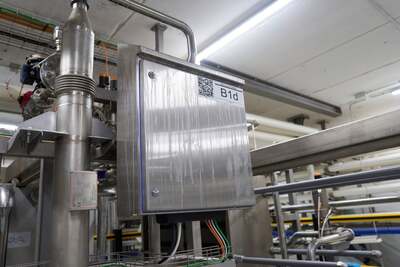
To meet these requirements, Liquats Vegetals implemented Rittal HD stainless-steel enclosures across its production equipment.
Beyond Stainless Steel: Designed for Cleanability
Stainless steel alone does not make an enclosure suitable for hygiene-critical food production.
Rittal’s Hygienic Design enclosure range is engineered for environments where cleanability, corrosion resistance, and contamination prevention are essential.
Key design features include:
- 30° sloped roof design to prevent water and residue accumulation
- Rounded edges and smooth stainless-steel surfaces to reduce contamination traps
- External blue silicone gaskets for clear inspection
- Joint-free external seals resistant to cleaning agents and disinfectants
- IP69 protection ratings for resistance to dust and liquids during cleaning procedures
These features support more efficient sanitation processes while helping reduce the risk of residue build-up and contamination in production areas.
Built for Long-Term Production Environments
For food manufacturers, enclosure quality and durability are critical to production continuity.
Liquats Vegetals identified long-term equipment performance as an important part of its sustainability approach, noting that replacing enclosures after only a few years would interrupt production and conflict with its broader sustainability strategy.
According to Corachan:
“We need to be able to rely on the quality of the components in our production equipment over a period of many years.”
This long-term view reflects a key consideration for Australian food manufacturers: enclosure systems must withstand cleaning processes, protect internal technology, and maintain hygienic performance throughout the operating lifecycle.
Supporting Digital Maintenance Workflows
As food production environments become more connected, access to accurate documentation is also becoming increasingly important.
Liquats Vegetals adopted Rittal ePOCKET to support digital documentation management, giving engineering teams access to current equipment information, wiring diagrams, and system records when required.
This supports improved traceability, more efficient servicing, and better management of production infrastructure across the facility.
Designed for Hygiene-Critical Manufacturing
For Australian food manufacturers, enclosure systems are no longer passive infrastructure components.
Hygienic Design supports cleanability, durability, and long-term operational reliability in environments where food safety and production continuity are essential.
Rittal’s HD enclosure range provides a practical, standards-based approach for production areas where hygiene performance cannot be compromised.
Liquats Vegetals was originally published in be top magazine of the Friedhelm Loh Group, Issue 01 | 2026. Story by Patricia Späth.
To learn more, download brochure; An Appetite for Perfection:
https://www.rittal.com/au-en/au/LandingPages/An-appetite-for-perfection
Compare food-grade vs non-food-grade enclosures:
https://www.rittal.com/au-en/LandingPages/Comparison-Chart-Food-Grade-vs-Non-Food-Grade
Robust cable solutions for food and beverage manufacturing
By choosing robust cabling from the outset, food manufacturers can help to protect the...
How Smarter Compressed-Air Monitoring Can Help Food & Beverage Manufacturers Improve Reliability and Efficiency
ELGi's Air~Alert provides food and beverage manufacturers with connected monitoring...
From Manual Weighing to Intelligent Quality Control with METTLER TOLEDO's IND400
Why Today's Manufacturers Can't Afford to Weigh by Guesswork.