Five trends set to shape Australia's food & beverage industry in 2026
By Terry Smagh, Senior Vice President and General Manager, Asia Pacific and Japan at Infor
Thursday, 22 January, 2026
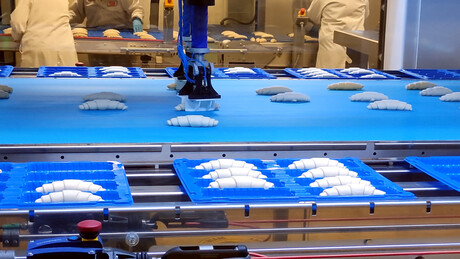
Australia’s food and beverage manufacturing sector is standing at a crossroads of opportunity and innovation. The combined effects of climate change, unstable supply chains, cyberthreats and high tariffs have led to escalating losses and pressure on profitability. At the same time, technological advances in food production and AI-supported business processes are driving productivity gains — but only for those willing to digitalise.
Industry 4.0 has been steadily transforming Australian industrial manufacturing. Smart factories powered by big data, cloud computing and automation are creating responsive, efficient and flexible processes that benefit the entire sector. According to a report by the Tech Council of Australia and Microsoft, Generative AI could contribute up to $5 billion a year to Australia’s manufacturing industry by 2030.
More recently, the principles of Industry 4.0 and the use of AI have intertwined to create a powerful driver of more efficient production processes, better resource utilisation and new forms of value creation. In agtech, AI and predictive analytics are revolutionising dairy farming in Australia, while robotics and machine learning are helping to optimise cotton farming practices. In light of these developments, what can food and beverage manufacturers across Australia expect in the coming year?
1. AI agents for automation and improved data-driven decisions
Modern cloud platforms bring together data from multiple sources and systems, including MES (manufacturing execution system), IoT sensors, quality management tools and ERP. AI models specifically developed for food production can process vast amounts of information and consider far more variables than were ever manually possible. By embracing these capabilities in 2026, Australian food and beverage manufacturers will be able to optimise production while maintaining product quality and reducing waste. Tools such as AI-supported email-scanning for supplier invoices, customer orders and complaints, as well as intelligent chatbots that handle routine inquiries, will ease the administrative burden on employees and free up resources for higher-value work.
2. Real-time transparency to manage volatile supply chains
Australian food and beverage companies operate within highly complex and interdependent supply chains. With uncertainties in global trade and fluctuating crop yields influenced by changing growing conditions, clear real-time transparency plays an increasingly crucial role in business success. Last year, flooding in Queensland severely affected Australia’s banana crop. The ability to anticipate disruptions, identify alternative sourcing channels, and quickly adjust production plans will be an essential competitive advantage in 2026, particularly as climate-related disasters become more frequent.
3. Finding the optimal balance between inventory and margins
Food and beverage manufacturers know the challenge of maintaining balanced inventories all too well. Rising raw material prices and shifting consumer behaviour continue to put significant pressure on producers of perishable goods. As a result, they must carefully balance stock levels with margin protection, and, if necessary, adjust quickly and efficiently. Queensland-based InFarm, for example, uses AI and advanced technologies to help farmers boost productivity and efficiency, including an advanced weed-detection platform and drone-to-tractor solution that targets weeds with precision. The adoption of similar data-driven tools for demand forecasting and resource planning will gain momentum in 2026, helping manufacturers reduce waste, protect margins and secure profitability in a challenging market.
4. Strengthening compliance through smarter, more scalable processes
Rapidly changing regulations around food safety and environmental sustainability demand greater flexibility from Australian food manufacturers. In 2026, more businesses will rely on technologies such as AI and process mining to track, verify and automate compliance processes while reducing operational risk. These tools also help smaller manufacturers to stay productive with fewer resources and remain audit-ready, even as requirements change. Strengthening compliance in this way will support both operational resilience and consumer trust.
5. Harmonising data, systems and processes to unlock efficiency
The food and beverage manufacturers that invest in the right technology will begin to see meaningful gains in 2026 as they minimise costly customisations, accelerate the rollout of AI-supported use cases, and leverage automation to unlock operational transparency and uncover new efficiencies. Achieving this requires a harmonised approach in which data strategy, application systems and operational processes work together, thus transforming complex challenges into strategic advantages. Australia, a global competitor in agriculture and farming, is already on the right track with its national digitalisation efforts. The priority now is to seize the potential of AI and turn manufacturing challenges into opportunities in the year ahead.
58% of food manufacturers report less productivity, research finds
Argon & Co research found that Australian food and beverage workers were still doing a lot of...
Humidification solution for Tasmanian Botanics
Australian medicinal cannabis producer Tasmanian Botanics required a solution to control humidity...
How AI is changing the way food and beverage manufacturers prevent and manage recalls
Businesses that stand to benefit the most will be those with all their data in one place,...