Food loss vs packaging waste, global position paper released
By Nerida Kelton, FAIP Executive Director; AIP Vice President Sustainability; Save Food – WPO
Monday, 19 January, 2026

The United Nations Industrial Development Organisation (UNIDO), World Packaging Organisation (WPO) and Wageningen University & Research have released a collaborative position paper ‘Navigating the Food Loss & Waste Paradox: Balancing Food Loss & Waste with Save Food Packaging’. The paper was co-authored by Eelke Westra (Wageningen University & Research), Nerida Kelton (WPO) and Aleksa Mirkovic (UNIDO).
This collaborative project leverages the diverse expertise and perspectives of these esteemed institutions to provide a nuanced understanding of the complexities involved in achieving a sustainable and resilient global food system. By unravelling these intricacies, the team seek not only to inform, but to inspire actionable solutions that resonate across sectors, borders and industries.
The Food & Packaging Waste Paradox position paper explores the complex interactions that exist between sustainability challenges posed by food loss and waste, and the environmental impact of food packaging.
The purpose of this position paper is to explore the intricacies of this paradox, delving into the challenges, opportunities and potential solutions that lie at the intersection of food loss and waste, and Save Food Packaging.
The role of packaging in minimising waste
First and foremost, the true role of packaging is its functionality. Packaging needs to be designed to ensure that a product is protected, preserved, contained and transported all the way through the value chain from production until it is used in the household.
Packaging also plays a vital role in ensuring the health and safety of the products and consumers that product waste is kept to a minimum and the efficiency of the packaging can withstand the rigours of transport.
When re-designing packaging to meet global and local packaging waste and sustainability targets, the functionality simply cannot be ignored. ‘Sustainable Packaging’, in the simplest of terms, is packaging that performs the primary role of functionality, but is also designed with the lowest possible environmental impact when compared to an existing or conventional pack. Finding the balance between functionality, commercial reality, consumer demands and environmental criteria is the real challenge for packaging technologists across the globe.
The challenge for packaging technologists is to be able to design optimum packaging with the lowest environmental impact at the start. It is about finding the balance between meeting food waste targets, at the same time as achieving packaging waste targets.
If the balance is tipped either way, it will create unintended consequences which could see over packing (wasting packaging materials) or under packing (wasting food). Finding the perfect balance can be challenging and requires technical knowledge and understanding of packaging design.
Save Food Packaging is designed to minimise or prevent food waste from paddock to plate using innovative and intuitive design features that can contain and protect, preserve, extend shelf life, easily open and reseal, provide consumer convenience and portion control; all the while meeting global sustainable packaging targets1.
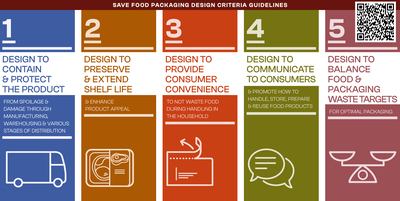
The new Food & Packaging Waste Paradox position paper touches on a broad range of Save Food Packaging examples from across the globe that have been awarded WorldStar Packaging Awards that are coordinated by the World Packaging Organisation (WPO) including two from Australia; ThermoShield Temperature Monitoring System by Caps & Closures and Junee Prime Lamb by Sealed Air.
Global perspectives on sustainable food systems
Sustainable and inclusive industrial development plays a critical role in building food systems that are resilient and resource efficient. These efforts are particularly important for supporting livelihoods and improving food security in developing countries, where communities often face heightened vulnerabilities related to poverty and food scarcity. This approach not only supports food security and economic development but also contributes to broader climate and sustainability goals
Coinciding with the development of the position paper, UNIDO brought together representatives from across sectors and regions which allowed for critical dialogue needed to identify concrete priorities, challenges and opportunities within global food systems. The global consultation journey reached 147 representatives, from 53 different countries to exchange insights and experiences.
The consultation journey highlighted the need for a comprehensive, systems-based approach addressing the entire food supply chain, with targeted focus on food processing and packaging technologies. This is essential for building effective, resilient and sustainable food supply chains that minimise food loss and waste.
To achieve this, the following areas of action are recommended:
- Strengthening centres of excellence on packaging
- Public awareness and education
- Quantification and a systematic global approach
- Partnerships
- Global outreach and advocacy
- Support in developing realistic national and regional policies
Navigating the Food & Packaging Waste Paradox is a challenging landscape for governments, and therefore requires tailored support to develop actionable, coherent and context-specific policies. Aligning national regulations with international frameworks, whilst considering local production and waste, recovery and recycling infrastructure, is critical to ensure effective implementation and sustainable industrial development.
Collaboration across the supply chain, from producers to retailers and consumers, is essential to implementing effective and scalable solutions. As the industry struggles with the Food & Packaging Waste Paradox, a delicate equilibrium between consumer demands, industry innovations and environmental sustainability emerges as a crucial imperative.
If more packaging professionals, researchers and food organisations across the globe start to follow the same guidance and use the Save Food Packaging Design Guidelines, the ability to improve the food and packaging waste paradox will become possible.
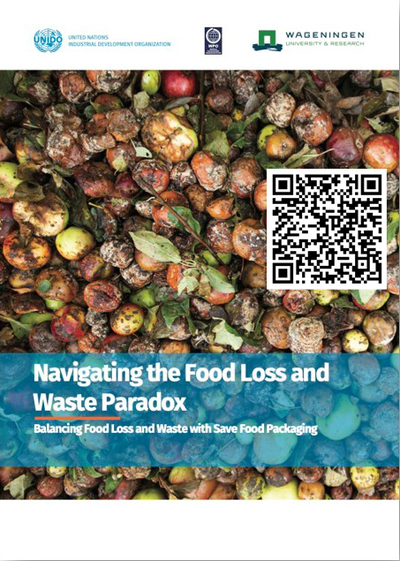
To download the position paper, visit here.
1. Francis, C., Kelton, N., Ryder, M., Lowenstern, B. Lockrey, S., Verghese.K, 2023
Product profile: making multihead weighing easier for operators
Equipment that is easier to operate, easier to clean and simpler to maintain can make a...
Packaging refresh for Victorian craft spirits brand
Peacock Bros has worked with Organic Bay Distillery on a packaging redesign to help strengthen...
From six weeks to three days: Australian software overhauls US manufacturer’s label approvals
The AI-native label management software has cut the label approval cycle at a US sports nutrition...