Frog peptide could increase the shelf life of strawberries
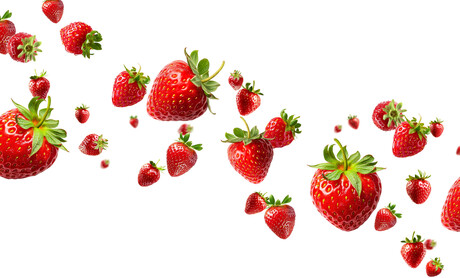
Five minutes. That was the amount of time that strawberries remained in contact with the Ctx(Ile21)-Ha peptide — a molecule isolated from a frog native to the Brazilian Cerrado — in experiments conducted in Brazil by scientists at the Tupã campus of São Paulo State University (UNESP). It was enough to demonstrate the molecule’s potential to extend the shelf life of the fruit, which is highly perishable.
“The peptide alone, without any other components, maintained the characteristics of ripe fruit after five days — which, for a strawberry, is a long storage period. We didn’t expect that much,” said Eduardo Festozo Vicente, who coordinates the Multi-User Equipment Laboratory at the UNESP School of Engineering and Sciences (LEMU-FCE), where the study was conducted with funding from FAPESP.
Peptides are molecules resembling proteins (albeit simpler and smaller) that execute various functions inside the organism. Vicente has been studying the peptide since his master’s degree nearly 20 years ago. He notes that the team has not yet conducted microbiological studies to understand the mechanism of action of the molecule, which is antimicrobial.
In an article published in the journal Applied Food Research, the team focused solely on the physicochemical parameters of the fruit treated with the molecule. They found that the peptide treatments did not interfere with the fruit’s flavour and did not significantly affect the phenolic compounds or total soluble solids. This indicates that the molecule preserved the fruit’s chemical composition, according to the researchers.
While the peptide Ctx(Ile21)-Ha isn’t regulated for use yet, Vicente believes that the regulatory process would not be problematic, as other commercial peptides are already approved and in use in Brazil. The group has already filed a patent application for its use in laying hens and has another pending for use in ruminants.
“We still need to work on the microbiological aspects and conduct the necessary tests, and that’ll certainly be the next step,” Vicente explained. “In addition, we aim to produce the peptide on a large scale using models well-established in the literature, such as yeast. Another avenue would be the creation of a film or coating to wrap fruits with skins, since current regulations prohibit fruits that are consumed without their skins from being wrapped in edible films.”
Platform launches in Australia to help lift automation adoption
Robotics Australia Group has launched an initiative that is designed to take the guesswork out of...
Arnott's Group celebrates its suppliers at Sydney event
The Arnott's Group has celebrated the contributions of its supply partners across operations...
Top 6 impacts of robots, revealed in IFR position paper
The International Federation of Robotics' latest position paper reveals how robots can have a...