Palsgaard kicks off Netherlands factory expansion
Monday, 13 February, 2023
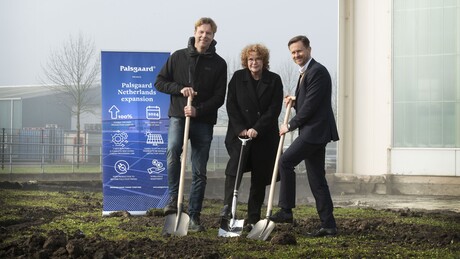
Palsgaard has started work on an €8m (AU$27.7m) expansion of its Netherlands factory, which is used to manufacture high-grade PGPR emulsifiers and also makes specialty ingredients for margarine and bakery.
Polyglycerol polyricinoleate (PGPR) is a co-emulsifier primarily used in chocolate production. It is designed to control flow, reduce viscosity and optimise moulding and enrobing. PGPR can also reduce fat content in margarine spreads and is a plant-based colour-dispersing aid that can replace petrol-based waxes in plastics.
Set to be completed in 2024, the expansion to the plant will double the company’s global capacity to produce PGPR, which is growing in demand by 10% annually.
In 2018, the facility achieved CO2-neutral production Scope 1 and 2 status. The design of the extension includes an additional 1500 m2 of solar panels, the complete electrification of PGPR production, three new reactors and a downstream processing line.
Palsgaard Netherlands Site Director Joris Dhont said, “As well as almost doubling our PGPR capacity to 11,500 MT annually, this expansion will substantially increase storage capacity for raw materials and finished goods, which will secure business continuity in times of supply chain disruptions.”
Chief Operations Officer Kim Bøjstrup said the expanded plant will continue to manufacture high-quality, palm-free PGPR products.
Palsgaard is also investing in its Danish production site, installing a 30,000 MT spray cooling tower. This facility will be supported by the construction of multiple new reaction, distillation and esterification plants. The €125 million investment will double its production capacity by 2024.
NewCold's $200m expansion of cold storage facility in Vic
As frozen food demand grows across Australia, NewCold has expanded its cold storage facility at...
Lactalis plans to close dairy factory in Gippsland, ADF comments
Australian Dairy Farmers said the news about the dairy factory closure in Victoria reflects...
Nestlé Purina PetCare to build integrated pet food plant in Italy
In order to meet growing demand for pet food, Nestlé Purina is investing approximately...