Beverage facility built to keep the good times rolling
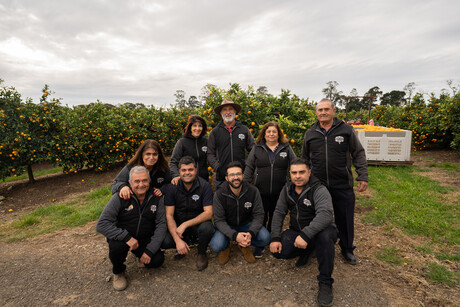
Aussie-owned since 1965, Eastcoast Beverages has entered its third generation of beverage manufacturing marked with the opening of a new fully automated facility in Kulnura, NSW.
For six decades, the Lentini family’s citrus farm has been passed down through three generations — the first generation built the citrus business, the second generation diversified into beverages, and now the third generation is expanding with a new modernised production approach and further diversification.
The great-grandson of the founder of the business shares details about the exciting next phase of the business following the opening of its ‘Gen-3’ facility on the family farm. The new facility in Kulnura is just one of the recent projects at Eastcoast, which has also launched a new processing partnership in Griffith and two new product developments that are keeping the good vibes of the 60s alive.
“My great-grandfather [Salvatore Lentini] started the business over 60 years ago picking and packing fruit at Sydney markets,” said Samuel James Lentini, Managing Director of Eastcoast Beverages for the last six years.
Samuel explains that in the late 80s, the government lifted tariffs on importing juice concentrates so it became cheaper to import a concentrate from overseas. “That’s when Dad and his two brothers decided to diversify and started squeezing their own fruit and selling juice.”
Over the last 10 years, Samuel said the business has grown significantly, around 15–20% year-on-year, so it was time to upgrade the facility and map out its future.
Enter Gen 3
The company’s growth trajectory has meant that AI and automation are a key part of its expansion plans for now and into the future.
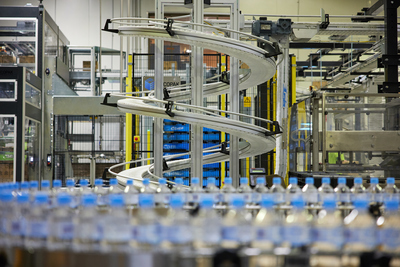
The new facility at Kulnura is now in operation with a fully automated manufacturing capacity of 120 2-litre bottles/min — which is a 50% increase in capacity compared to the previous facility.
“Before, it used to take around 15 min to do a pallet and now it only takes 3–5 min per pallet,” Samuel said.
“From our Kulnura farm we grow fruit onsite, we squeeze onsite, we bottle onsite, we distribute onsite and we even live onsite!”
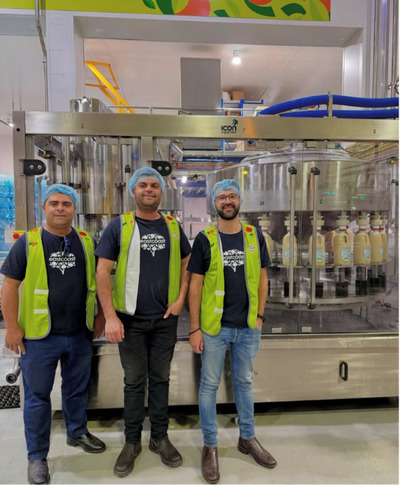
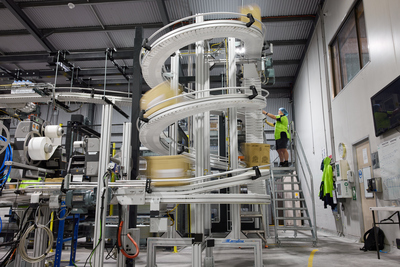
The original factory was basically torn apart over the last 18 months as the new fully automated line was established in three stages: firstly, the filler equipment was installed, then the automated palletiser, and the final stage was the installation of the automated case packer.
“It’s been a journey that we’ve been planning over the last five years, so it’s been good to see it all come to life.”
Squeezing closer to the source
While growth is improving, there are still many challenges facing food manufacturers and consumers alike, with rising interest rates, energy and fuel costs, and all the red tape associated with running a business.
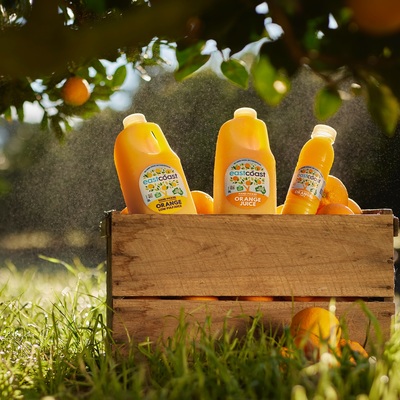
During stage 2 of the factory build, Samuel said the company partnered with a grower called Mario’s Packhouse, a third-generation, family-owned citrus grower and packing operation in Griffith.
“We’ve started a processing facility with Mario’s, which has been up and running for about three months in Griffith, called the Australian Juice Co,” Samuel said.
“It has been set up to supply other bottling manufacturers and for us to control supply chain as best we can by squeezing closer to the source and bringing juice into our facility from Griffith.
“We now have our pick of fruit from our farm and other areas up north, but the majority of fruit comes from Griffith.
“Partnering with the growers gives them more flexibility in transporting the fruit closer to home. It also saves us on freight and logistics — so it’s a part of our sustainability story.”
The business has a ‘Return — Regrow — Renew’ sustainability philosophy that is designed to make sure nothing is wasted. For example, pulp from its pulp-free juice becomes an ingredient for yoghurt companies, peel becomes feed for livestock and treated wastewater is used to replenish the trees.
Getting ‘The Goods’ with juice
“In my view, the juice category has become a bit stagnant in the past decade and there is a real push for functional beverages,” Samuel said.
“This is where our diversification strategy comes in, as we have been focusing on a couple of projects for the last 12–18 months with our food science, marketing and NPD team.”
The business has recently launched a functional beverage to meet the demand from consumers who “want more from their drinks”, according to Samuel.
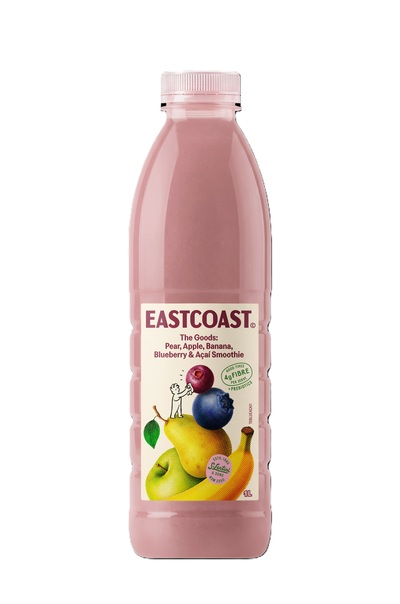
Available in a 400 mL and 1L bottle, ‘The Goods’ is Eastcoast’s new pressed juice and smoothie range available in three flavours with 4 g of fibre per serve plus prebiotics.
“This new product launch is the first iteration, homing in on the 1960s good vibes, with a good fibre and prebiotic call-out as well, which is really cool,” Samuel said.
Another new product is set to be released for the kids’ market in November. “We are going for something completely different with a 100% real juice jelly. Being packaged in pouches is also quite unique for the beverage market.”
The Aussie family’s beverage business is now making around 500,000 L per week and looks like it’s in good hands, with the third generation well prepared for the future.
AGL supports large-scale rooftop solar project for Bega Group
AGL has set up a practical power purchase agreement to assist with Bega Group's energy...
Baiada Poultry opens its multimillion-dollar processing plant in Tamworth
With a current capacity of processing 1.5m chickens/week, the modern purpose-built facility...
Mars expands local pet food production with new $112.6m facility now open
Producing around 290 million pouches annually, the so-called 'cat food kitchen' facility...