Parkside collaborates with fruit farm for compostable packaging
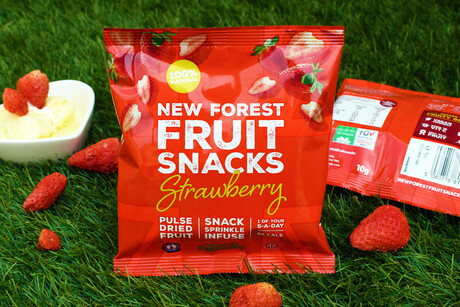
The New Forest Fruit Company has collaborated with Parkside to develop home-compostable flexible packaging for its range of ‘plant to packet’ dried strawberries.
The packs are made with Parkside’s patented triplex Park2Nature material, which is TÜV certified as home-compostable within 26 weeks in normal composting conditions and 12 weeks in an industrial composting facility. The products are grown, processed and packed entirely on the New Forest Fruit Company’s farm in New Forest, Hampshire, ensuring minimal carbon footprint for each product.
Staci Bye, Parkside Business Unit Manager, said the partnership saw both companies share a goal to develop a high-quality product that is packed as sustainably as possible. The product, a novel combination of pulse drying and freeze drying, is among the first of its kind in the UK snack market.
The compostable packs were developed with the brand’s sustainability goals in mind. The combination of drying methods desiccates the fruit pieces while retaining shape, flavour and nutrients, allowing New Forest Farm to process fruits that are too large, small or misshapen to meet retailer’s specifications.
Sandy Booth, New Forest Fruit Company owner, said it was important to collaborate with a company that could provide flexible packaging that had not only been tested and accredited, but also designed for the specific needs of New Forest Fruit Company’s strawberries.
The Park2Nature range of packaging from Parkside uses a laminate material made using PEFC-accredited plant-based resources and is GMO- and PLA-free.
AFGC welcomes Domestic Gas Reservation Bill
Food and grocery sector welcomes domestic gas reservation legislation as critical step for...
FSSC Certification Scheme now includes Save Food Packaging
FSSC, WPO and AIP have united to introduce Save Food Packaging requirements into Version 7 of the...
Upcycling cauliflower waste into protein ingredients for future food
RMIT researchers have developed an ultrasound method to extract protein from discarded...