Innovations in inspection solutions for meat, poultry and seafood
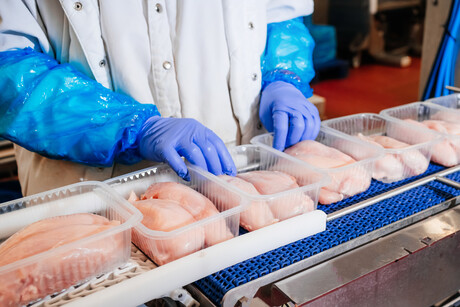
Food safety inspection has never been more important. Retail and export customers are tightening their standards, labour costs are rising, and one contamination recall can permanently damage a brand built over decades.
Most food industry inspection strategies treat contamination control as a layered discipline, not a single checkpoint. In meat, poultry and seafood processing, both X-ray and metal detection can be deployed at multiple stages — and each placement serves a different purpose.
Built for the demands of meat, poultry and seafood processing, Heat and Control’s advanced inspection solutions provide fast, accurate and reliable solutions across a range of applications.
Two of the latest systems with relevance to protein processing are the Ishida IX-PD X-ray inspection system and the CEIA THS Series metal detectors. Used individually or together, they represent the leading edge of what’s available to Australian processors today.
Ishida IX-PD Series X-Ray
Leveraging photon counting dual energy technology, Ishida’s IX-PD X-ray machine features an advanced sensor and refined image processing. Particularly effective at the raw, unpackaged stage of processing, it’s twin-lane configuration enables inspection of a range of cuts, including chicken fillets, fish portions and diced beef.
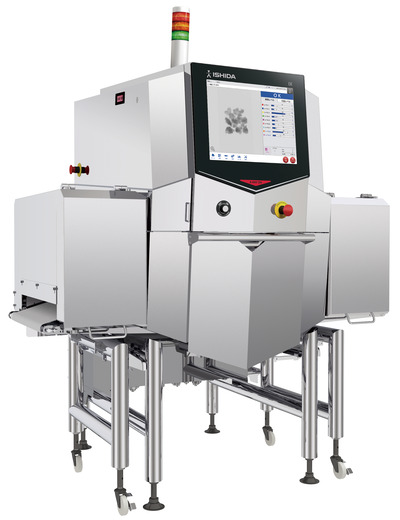
The system can also be configured to reject product to an inspection table, where the detected bone is highlighted, assisting operators in quickly and accurately removing the bone and returning the product to the line. This saves rework later in the process, minimising packaging waste and supporting higher yields.
Metal detection, in contrast, remains the industry workhorse for final packaged product inspection, for retail ready processing requirements.
For processors handling bone-in or deboned poultry and fish, X-ray inspection should be considered the primary technology. Metal detectors cannot reliably detect bone fragments, shells or glass — hazards that are endemic to these protein categories.
The Ishida IX-PD's dual-energy sensor and photon-counting technology make it particularly well-suited to detecting low-density contaminants that conventional X-ray systems struggle with.
Previous high-accuracy models use a high energy image and a low energy image, then compare them to detect foreign objects. The process of producing these images took several stages, with each stage slightly detracting from the final image.
“With the unique direct conversion that Ishida have implemented for the IX-PD range, required steps to produce an image are greatly reduced, and this mitigates the image deterioration through electronic processing. The end result is a sharper image with a pixel size of 0.2mm,” said Paul Irwin, Sales Executive for Packaging and Inspection Systems at Heat and Control. “Once the image is fed through the system’s Deep Learning AI driven image analysis, the results are astounding.”
Metal detection
For processors handling red meat, the risk profile shifts. Metal contamination from equipment wear — knife fragments, wire, screen mesh — becomes the dominant concern. CEIA’s THS/MS21 multi-spectrum metal detector, operating simultaneously across multiple frequencies, provides high sensitivity to magnetic, non-magnetic and stainless-steel contaminants, even in challenging products containing salt, moisture or iron that can often generate false signals.
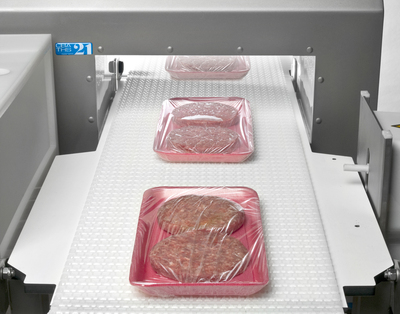
The THS/MS21 also offers the innovative Auto test QA function that helps to reduce labour costs. For example, traditional metal detector validation required operators to manually pass test pieces through the system at set intervals — a process that consumed time, depended on operator diligence, and created compliance gaps if procedures lapsed. CEIA's latest THS series detectors address this directly through an automated self-test capability and an Auto-Learn function.
The latest X-ray and metal detection technologies also assist through their improved user-friendliness.
“Both systems offer intuitive interfaces that remove the need of specialised machine operators. With a mix of Auto Test and Auto Learn functions along with self-testing and easy product setup, staff can run the system confidently in an extremely short amount of time,” added Irwin.
The cost of getting it wrong
The commercial and reputational consequences of inadequate inspection are well documented — and often disproportionate to the scale of the incident. The most effective mitigation lies in deploying the right technology for the product and risk profile, validating and documenting performance, and ensuring systems can deliver the audit trail required by processors and regulators.
To support this, Heat and Control offers a comprehensive inspection portfolio, including Ishida’s IX-PD X-ray systems and CEIA metal detection technologies. With a range of models and capabilities tailored to suit processors of all sizes, applications and throughput requirements, these solutions provide reliable, high-performance inspection across diverse processing environments.
With more than 75 years of experience, Heat and Control has a strong local presence in Australia, supported by more than 270 employees, including engineering and product specialists. As the exclusive supplier of CEIA and Ishida inspection technologies in Australia, the company works closely with customers to identify the right solution. Turnkey integration and ongoing support ensure systems continue to perform as requirements evolve.
Robust cable solutions for food and beverage manufacturing
By choosing robust cabling from the outset, food manufacturers can help to protect the...
How Smarter Compressed-Air Monitoring Can Help Food & Beverage Manufacturers Improve Reliability and Efficiency
ELGi's Air~Alert provides food and beverage manufacturers with connected monitoring...
From Manual Weighing to Intelligent Quality Control with METTLER TOLEDO's IND400
Why Today's Manufacturers Can't Afford to Weigh by Guesswork.