Fast detection of food contamination using enhanced AI tool
Researchers have enhanced an artificial intelligence tool used to rapidly detect bacterial contamination in food by eliminating misclassifications of food debris that looks like bacteria.
Bacterial contamination of food can occur throughout the entire production process, from pre-harvest on farms to post-harvest handling, processing and the finished product.
While conventional methods used to detect contamination of foods such as leafy greens, meat and cheese can take nearly a week, the new rapid detection method is designed to accurately detect within three hours.
Luyao Ma, an assistant professor at Oregon State University, and her collaborators from the University of California, Davis, Korea University and Florida State University, developed a deep learning-based model for rapid detection and classification of live bacteria using digital images of bacteria microcolonies.
It involved training the model to distinguish bacteria from microscopic food debris to improve its accuracy. A model trained only on bacteria misclassified debris as bacteria more than 24% of the time. The enhanced model, trained on both bacteria and debris, eliminated misclassifications.
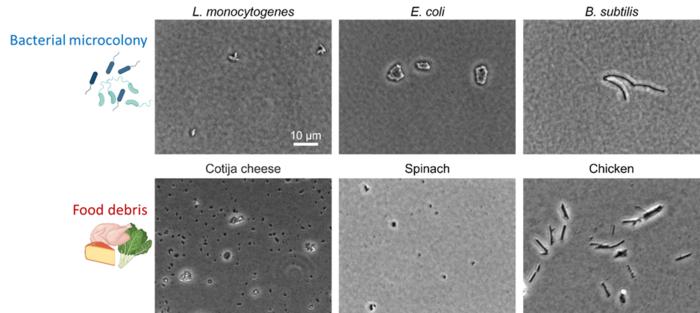
The study, published in npj Science of Food, tested the deep learning model on three bacterial strains — E. coli, Listeria monocytogenes and Bacillus subtilis — and food debris from chicken, spinach and Cotija cheese.
“Early detection of foodborne pathogens before products reach the market is essential to prevent outbreaks, protect consumer health and reduce costly recalls,” Ma said.
Researchers are now working to optimise the AI system for food industry applications.
Air Liquide to build industrial and medical gas plant in NSW
The plant is being built to enhance the local industrial and medical gas supply across Australia...
Fat recovery method for industrial ice-cream waste
Penn State researchers have developed a simple method that could help with the recovery and reuse...
Blue-light approach to reducing Campylobacter in poultry
The novel technique developed in the UK to reduce surface contamination on poultry products is...