In-shell nut inspection system finds hidden product defects in pecans
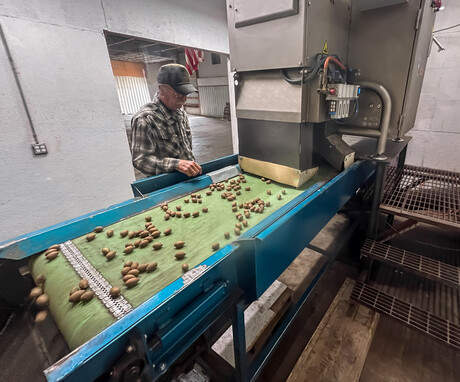
Payne’s Pecans is a family-owned pecan cleaning business that handles up to 907,000 kg of in-shell pecans annually for local growers. Founder Jay Payne has been around pecans since childhood, when he picked nuts from his family’s grove for Christmas money. Since he opened Payne’s Pecans in Rich Hill, Missouri, in 2004, labour has become harder to find, while buyers have grown more particular about product quality. Last year, Payne began using WECO’s Multiscan MXV-Bulk X-ray inspection system to improve product quality, increase throughput and reduce reliance on hand-sorting.
“Inspection has always been one of the hardest parts of this business,” Payne said. “Finding several people to stand at a table and sort pecans by hand for hours is difficult enough, but there’s also only so much a person can catch by eye. We needed a better way to identify internal product defects.”
While optical sorters identify external characteristics such as colour, size, shape and surface condition, the MXV-Bulk analyses density differences inside each nut to identify hidden defects and insufficient kernel fill. The system also detects dense foreign material including stones, adding another layer of product protection before the pecans leave the facility.
The inspection system sits near the end of the line, after pre-cleaning equipment has removed much of the lightweight debris and obvious foreign material. As the pecans pass through the inspection zone, a channel belt keeps them stable and evenly distributed for scanning. The system analyses the X-ray images and triggers air valves to eject out-of-tolerance product.
“What surprised me most is what the system can detect that we simply couldn’t see before,” Payne said. “You can pick a pecan out of the reject stream, look at it and think there’s nothing wrong with it. Then you crack it open and find there’s little or no good nutmeat inside.”
For in-shell pecans, those hidden defects directly affect value. Buyers sample each lot, crack representative nuts and calculate the percentage of edible kernel. After installing the MXV-Bulk, Payne’s average grade increased from 40 to 44. “Buyers pay for what is inside the shell,” Payne said. “At 2 cents a point, going from a 40 to a 44 is another 8 cents a pound. On a big load, that adds up in a hurry.”
Consistency improved alongside grade. Payne’s A-grade lots now carry less than 1% lower-grade contamination, compared with the 2 to 3% the industry generally accepts.
“A machine evaluates every pecan the same way every time,” Payne said. “People get tired, and different people catch different things. Now, with our X-ray system, we’re getting much more consistent inspection. Buyers who have bought from me for years told me it was the best product they had seen come out of here.”
The operational gains have been equally significant. Before the X-ray system was installed, six to eight people inspected pecans by hand at the end of the line. Now, one person handles final inspection immediately after the system, with very little left to remove. With inspection no longer constraining production, Payne estimates throughput has increased by 907 to 1361 kg/h.
Despite the advanced technology, Payne says operating the system has been straightforward. Once the pecan settings were established, he has rarely needed to adjust the system, and daily cleaning consists primarily of wiping down the accessible belt.
Phone:
Sidel filler for edible oil
Sidel Group's filler for edible oil has been designed for filling precision and ease of use.
GEA ProCoater wet coating machine
The GEA ProCoater is a wet coating machine developed to help food processors achieve more stable...
HRS Heat Exchangers compact and complete pasteurisation solution
The range of HRS Thermblock Series pasteurisers and sterilisers is designed to provide a...