Advances in the kokumi 'taste sensation' for food
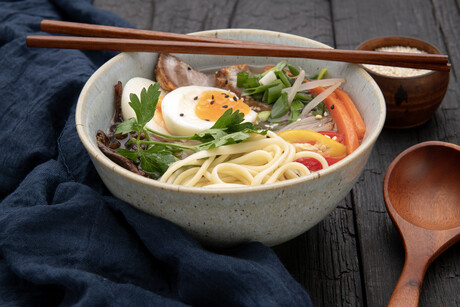
Kokumi is a Japanese word that means “rich taste”. The taste of kokumi works outside the five basic tastes of sweet, salty, sour, bitter and umami to enhance the perceived texture and flavour complexity of food.
Kokumi is elicited by kokumi substances, which are often γ-glutamyl peptides, or small amino acid chains with a unique peptide bond involving the gamma-carboxyl group of the amino acid glutamate. This gamma-carboxyl group turns regular glutamate into a special calcium-binding structure, which may play a role in receptor interactions on the tongue that elicit the kokumi taste sensation.
One of the current challenges facing the global food technology sector is how to preserve or augment the palatability of healthy foods being developed without increasing sodium levels. Many researchers are seeing kokumi as a potential way to improve the overall flavour of these otherwise plain-tasting food products.
Realising this potential, a team of scientists from Yunnan Agricultural University and Ningxia University summarised the current research progress, mechanistic debates, limitations of the current flavouring mechanism and future directions for kokumi study in a review paper. The paper was designed to spur further investigation into kokumi peptides and their use in food products and flavour enhancers.
The paper was published in Food Science of Animal Products by Tsinghua University Press.
“In-depth research on kokumi peptides not only helps to uncover the molecular basis of food flavour formation, but also provides essential technical support for the development of new healthy foods that are low in salt, low in fat and rich in flavour,” said Guiying Wang, professor in the College of Food Science and Technology at Yunnan Agricultural University in Kunming, China and senior author of the review paper. “Kokumi peptides have garnered considerable interest due to its dual functionality: it not only amplifies umami synergistic effects, but also effectively suppresses unpleasant flavours.”
Researchers have established that the γ-glutamyl peptides associated with the kokumi taste work through proteins such as calcium-sensing receptors (CaSR) and G protein-coupled receptor class C group 6 member A (GPRC6A) — proteins that were not associated with taste sensations prior to kokumi research. Additional research established how specific γ-glutamyl peptides bind to CaSR and potential neural pathways that may be responsible for the taste of kokumi, enhancing the perception of both umami and saltiness. Together, these studies established a structure-activity-perception model for kokumi taste.
With this increased understanding of kokumi activity, scientists developed a kokumi peptide sequence library and structure-activity relationship map that provides researchers with a summary of how different amino acid sequences bind and activate different receptors associated with the taste. This information has also been used to train machine-learning algorithms to predict new kokumi peptides for potential development.
One of the major hurdles for kokumi peptide development is the lack of sensory standardisation. “The inconsistent sensory groups and scoring scales used by different research teams, as well as the inconsistent standard substances or their corresponding concentrations selected, make it difficult to make horizontal comparisons of the results,” Wang said. Industrialisation is also a challenge, as natural peptide extraction costs are high, yields are low, and synthesis is either complex or has yet to be scaled.
Despite these challenges, the research team sees great promise in kokumi peptides and their flavour-enhancing capabilities.
Flavour research: AI tool to detect bitterness in peptides
A research team in Germany has developed an AI-based method to predict the bitterness of...
Call for submissions on proposal to add plant sterols to bread
FSANZ is calling for submissions about an amendment to the Australia New Zealand Food Standards...
Just a dash of protein enrichment for tomato sauce
Added protein is now common for many types of foods, from breakfast cereal to pasta, but not many...