What can food manufacturers learn from viral food trends?
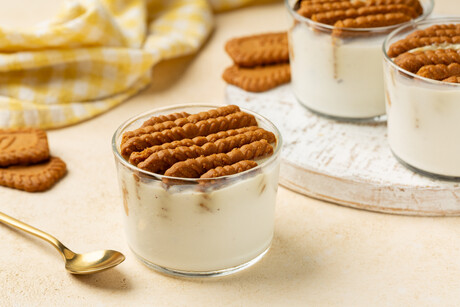
When Greek yoghurt disappeared from supermarket shelves earlier this year, the culprit wasn’t a supply chain failure — it was a viral TikTok trend.
Shoppers descended on the dairy isle of many supermarkets to buy Greek yoghurt in order to make a so-called “Japanese cheesecake” recipe that had gone viral on TikTok.
While the Greek yoghurt shortage was relatively innocuous, according to UNSW Business School consumer psychologist Professor Nitika Garg, it highlights a greater concern about what could happen if the same emotional mechanics were applied to other trends.
Garg, whose research examines how emotions shape consumer decision-making, identified three distinct forces at work in viral food trends: aspiration, novelty, and fear of missing out (FOMO).
At the centre of this problem sits a cognitive reality: most consumers do not have the time, tools or motivation to verify what they see online. They encounter content from people who appear credible and are carried along by the emotional momentum of a trend, and act. The verification step never happens.
Garg said: “People don’t always do the research. They get caught up with thinking ‘okay, maybe it needs cream cheese, but if you’re making it with Greek yoghurt, it must be healthy’. But most consumers do not stop to research what they’ve seen on social media, or to verify whether it’s really healthy. The problem is when people blindly rely on this information from non-experts. These influencers are not experts, even if they come across as them, and they don’t do their own independent verification.”
Where responsibility sits: brands, platforms and regulators
For companies, the calculation is somewhat clearer. When a brand formally engages an influencer, corporate liability produces more careful campaign management. Garg drew a distinction between the curated brand partnerships and the spontaneous viral trends, which follow no script and belong to no one.
“If it’s a firm, it might not be 100% rooted in science, but at least they wouldn’t do something overtly harmful, because they are worried about the liability side of things. So it’s a bit more vetted, and there’s more due diligence done in that process.”
The harder question concerns individual influencers, and it is one that regulatory frameworks have struggled to address. Disclosure requirements for paid endorsements vary across jurisdictions, but enforcement remains uneven, and organic viral content falls outside any formal accountability structure.
Garg described the ethical responsibility question as the million-dollar one. “The ethics or the regulations which can encourage ethical behaviour always lag behind the actual trends or these initiatives or strategies. The reason being that there are so many such things happening, especially in the digital marketing and social media marketing domain, that it is hard for regulators to always keep up.”
The accountability gap widens further when individual creators, rather than brands, are involved. “The platforms need to monitor more and hold more responsibility. Imagine doing that for individuals. That’s even harder, because individuals have less culpability. They can say, we are not trying to sell anything. I made a post. Did I ask you to go ahead and do something or buy something? The answer is no.”
The regulatory lag Garg described is not new. What is new is the speed at which the gap is widening. Generative AI is already producing video content of a quality indistinguishable from professional production, and platforms have demonstrated limited capacity to police it.
What food manufacturers, retailers and policymakers need to act on
The structural problem, as Garg framed it, is that the cognitive burden of navigating social media content has been placed almost entirely on the individual consumer.
The ask is unreasonable: verify sources, assess scientific credibility and distinguish expert from non-expert opinion, all in the seconds between seeing a reel and deciding whether to act on it. As Garg notes, this expectation falls on people without the time or resources to meet it.
“But imagine the average consumer. They don’t have the time, the cognitive ability or the motivation to do all this. So the system is sort of stacked against them.”
When a viral trend strips a product category from supermarket shelves in a matter of weeks, the lesson for food manufacturers, retailers and policymakers is not simply that social media holds power over consumer behaviour. It is also that frameworks built for a slower information environment (production capacity, supply chains, regulatory oversight) are now operating in one where demand can be created and amplified faster than those systems can respond.
Garg held little expectation of a proactive solution from platforms and regulators. Until then, she said it is likely that the emotional drivers of aspiration, novelty and FOMO will continue to drive food shopping trends that are not always the healthiest choices for consumers who are avid social media followers.
Tibaldi acquires South Food Group
Both Tibaldi and South Food Group are Victorian-based manufacturers and suppliers of smallgoods.
AFGC calls on government to cut red tape for Aussie food makers
The Australian Food and Grocery Council said the tough economic conditions highlighted the need...
Winners announced: 2026 Australian International Olive Awards
Winners of the nation's olive awards have been announced, recognising producers from...