The cost of Cyclospora outbreaks in the states
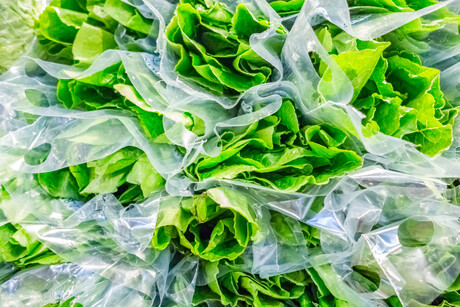
Earlier this year, the US saw its highest annual count of confirmed Cyclospora cases, roughly 12,833, according to the US Centers for Disease Control and Prevention (CDC). After investigations by the CDC and the US FDA, it was traced back to a supplier of shredded iceberg lettuce.
Now a new research study has found that Cyclospora outbreaks cost US bagged salad retailers an estimated $374 million, driven largely by internet searches by consumers after outbreaks were reported in the news.
The research, which was published in the journal Risk Analysis, examined outbreaks from 2018 to 2022 and found that the retail losses associated with these events vary with how much public attention the outbreak draws.
The study, conducted by researchers at The Ohio State University and the University of Florida, found that weekly bagged salad purchases were 3.89% lower on average during outbreak and recall periods, for an estimated retail loss of roughly $374 million.
Cyclospora cayetanensis, the parasite that causes cyclosporiasis, can survive standard chlorine washes at processing plants and live in soil or water for months. Symptoms of the infection include watery diarrhoea, abdominal cramping, bloating and loss of appetite. Most cases resolve on their own, but it can be more severe for people with weakened immune systems.
Large outbreaks were relatively rare in the US before 2018. However, in 2018, reported outbreaks were linked to 1165 illnesses nationwide, across both multistate events and smaller local clusters. Since then, annual outbreaks have sickened thousands of people and posed a substantial financial risk to the produce sector.
The study examined six large multistate outbreaks in the US, four of which were linked to salad products. At the time of the analysis, these six accounted for 2157 illnesses, or 65% of the 3344 outbreak-associated cyclosporiasis cases reported to the National Outbreak Reporting System between 2018 and 2022.
To examine how consumers responded, researchers analysed household purchasing data and Google search activity for “Cyclospora” across 210 media markets. Search volume served as a proxy for public attention to news coverage, public health notices and social media.
The study found that retailers did not meaningfully restrict supply during outbreaks or recall periods, suggesting that food safety concerns, not empty shelves, were the more likely explanation for the decline in purchases. Purchases were lower in outbreak-affected states, and also in states with no reported outbreak that shared a media market with an affected state. The size of the decline varied with what people searched for. Searches for “Cyclospora” were linked to the steepest declines, while general salad-related searches were linked to much smaller ones.
The 2018 and 2020 outbreaks were associated with the largest retail losses, at $79 million and nearly $190 million, respectively. The 2020 salad outbreak was the largest single event in the study, at 771 illnesses, but search volume ran higher during the 2018 outbreaks. The authors note that the COVID-19 pandemic dominated media attention in 2020, which may have muted consumer response to that outbreak.
“What people read online shows up in what they put in their carts,” said Xuerui Yang, study author and former PhD student at The Ohio State University, now postdoctoral scholar at University of Florida’s Institute of Food and Agricultural Sciences. “Balanced risk communication and consistent monitoring of search activity during high-stakes outbreaks can help anticipate where demand losses will concentrate.”
Mandatory Health Star Rating revised for a second consultation
The FSANZ is conducting the second round of public consultation on the Health Star Rating system...
Australian Grape & Wine appoints Mark Harvey-Sutton as CEO
AGW Board Chair Helen Strachan welcomed the appointment, saying Harvey-Sutton's experience...
Food inflation: let's take a look inside the basket
While Australia's overall inflation rose to 4.3% in September, ABS data showed that the food...