Managing the hygiene gap between cleans in cold-chain environments
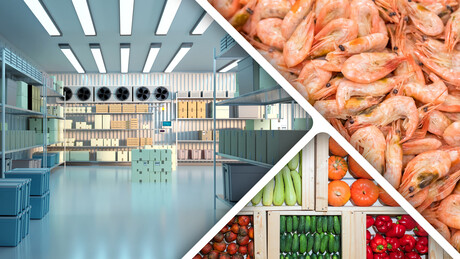
Step into almost any refrigerated storage room and the environment appears well controlled. Cleaning schedules have been completed, sanitation records are signed off, and surfaces present as clean. From a compliance perspective, the room satisfies requirements.
Yet many operators continue to report recurring mould growth in predictable locations, including ceiling joins, evaporator housings, door frames, high-moisture corners and air return pathways. This recurrence does not necessarily indicate failure of cleaning programs. Rather, it reflects the operational reality that cleaning is episodic, while refrigerated environments function continuously.
Cold temperatures slow microbial growth; they do not eliminate survival. Throughout the operating day doors are opened, warm air enters, condensation forms and reforms, and mechanical airflow circulates moisture and particulates. Following a scheduled sanitation reset, environmental pressure can gradually rebuild. This pattern is influenced by humidity, airflow dynamics, dwell time and human activity, particularly in high-throughput cold-chain settings.
As a result, a growing number of facilities are reconsidering how hygiene is managed between scheduled cleans. The question is not whether cleaning remains essential, but how environmental pressure may be stabilised during the intervals when no active sanitation step is occurring.
One approach now being applied in certain refrigerated environments involves the continuous delivery of ultra-low concentrations of hydrogen peroxide vapour as a background environmental support measure. Unlike periodic disinfection events, this model applies a steady oxidative presence during normal operation. It is not positioned as a replacement for established cleaning regimes, nor as a terminal disinfection process, and it does not require production shutdown.
Instead, the objective is to provide ongoing environmental support during the operational cycle, thereby moderating the gradual build-up that may occur between cleans. Facilities deploying this method in high-moisture cold rooms report improved stability in managing recurrent mould pressure over extended operating periods.
For any environmental control layer to be viable within food manufacturing, integration is critical. The system must align with existing airflow patterns, be suitable for occupied food environments, support HACCP frameworks and avoid introducing additional labour or complex infrastructure. When correctly implemented, such measures operate unobtrusively alongside established hygiene procedures.
Within contemporary HACCP practice, emphasis is increasingly placed on continuous improvement and proactive risk management. While sanitation resets remain fundamental, greater attention is now being directed to the interval between them. In cold chain operations characterised by longer dwell times and tightening compliance expectations, managing this between-cleans window may represent an important evolution in environmental hygiene strategy.
**************************************************
One example of this approach is an Australian innovation by Coolsan Australia called ChillSafe, a HACCP International & Organic Certified ultra-low-dose hydrogen peroxide vapour system for use in refrigerated food premises. The system is designed to control biofouling, the grime, mould and microbial build-up that accumulates on cooling mechanics (FDC units) and surfaces during daily operations. It operates continuously between scheduled cleans to help control these contaminants and is presently in use across Australia and other international markets.
AGL supports large-scale rooftop solar project for Bega Group
AGL has set up a practical power purchase agreement to assist with Bega Group's energy...
Baiada Poultry opens its multimillion-dollar processing plant in Tamworth
With a current capacity of processing 1.5m chickens/week, the modern purpose-built facility...
Mars expands local pet food production with new $112.6m facility now open
Producing around 290 million pouches annually, the so-called 'cat food kitchen' facility...