Poultry packaging partnership extends beyond the tray
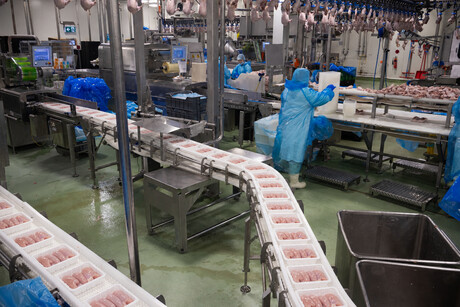
Western Australian poultry producer Mt Barker Chicken operates in a fast-moving processing environment where packaging must support operational efficiency, product presentation and supply chain certainty. Its evolving partnership with Australian food packaging business Multisteps Industries highlights how flexibility in materials, tray formats and supply planning can strengthen processing operations.
In modern poultry processing, packaging decisions extend far beyond the tray itself. For Western Australian poultry producer Mt Barker Chicken, packaging must perform under continuous operational pressure. The company processes fresh free-range chicken daily, delivering product to retailers the same night or the following day.
As Darrin Finlayson, General Manager – New Products, Processes & Purchasing at Mt Barker Chicken, explains, packaging performance is inseparable from operational reality.
“Packaging has to stand up to the process — we simply can’t introduce operational uncertainty into the production line,” Finlayson said.
“We’re processing seven days a week and producing fresh product every day. Packaging has to work consistently across sealing, cooling and logistics. If something disrupts the line, it simply doesn’t work for us.”
This operational reality has shaped Mt Barker’s approach to packaging partnerships, favouring suppliers who understand processing environments and can support evolving product requirements while maintaining supply reliability.
From supply challenge to strategic partnership
Mt Barker’s relationship with Multisteps, an Australian manufacturer of thermoformed PET and PP food packaging, began during a period of supply disruption.
“Our previous supplier couldn’t manufacture the trays we needed for several weeks,” Finlayson said. “We still had to maintain supply of our fresh chicken mince products, so we reached out to Phil at Multisteps to see if they could help.”
Multisteps was able to respond quickly, supplying the required trays within tight timelines.
“Once we gave Multisteps the opportunity with that first product, they delivered. They nailed it — and that opened the door to looking at other tray formats as well.”
What began as a supply solution soon evolved into a broader operational partnership as Mt Barker expanded tray formats and material platforms across its product lines.
Packaging designed for processing reality
Today, Mt Barker’s packaging requirements span multiple tray formats and material platforms.
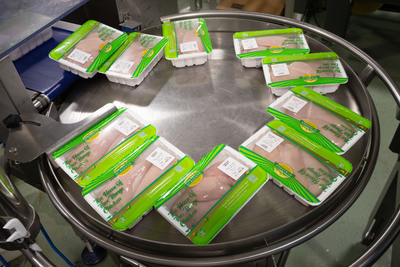
Approximately 70% of the company’s packaging uses Modified Atmosphere Packaging (MAP) trays, with the balance across Vacuum Skin Packaging (VSP) formats for selected product lines.
However, packaging decisions begin with operational performance rather than materials alone.
“The packaging has to be fit for purpose,” Finlayson said. “That includes sealing, food safety, cooling and how the product moves through the logistics chain.”
Shelf presentation is also an important consideration for retail-facing products.
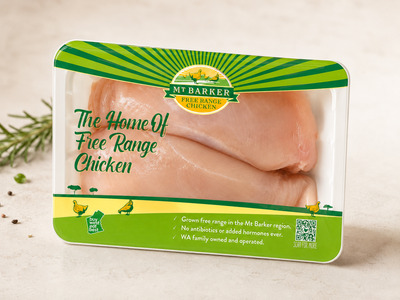
“One of the biggest improvements we saw was tray clarity,” Finlayson said. “Our 8×5 clear tray has been a standout. We believe we’ve got a very good product inside, so we want the packaging to show it off.”
Managing material complexity
Like many protein processors, Mt Barker is balancing operational requirements with evolving sustainability expectations.
“Sustainability is embedded in what we do,” Finlayson said. “We’d prefer to move toward the most recyclable materials available — particularly PET — but not every application allows that operationally.”
Certain processing environments require materials capable of withstanding specialised conditions, including pasteurisation-in-pack or high-temperature cooking.
As a result, Mt Barker has adopted a multi-material approach, evaluating packaging on a product-by-product basis.
“First it has to work operationally,” Finlayson said. “Then the question becomes: what is the most recyclable option we can use for that application?”
Today this includes Mono PET, PET/PE and Mono PP tray formats, allowing the processor to transition materials where feasible while maintaining operational certainty.
“Having a supplier that can support multiple materials is very important,” Finlayson said. “It allows us to transition formats over time rather than constantly changing suppliers.”
Strengthening supply chain certainty
For Mt Barker, supply reliability is just as important as packaging performance.
The company processes poultry seven days a week and distributes products across Western Australia and interstate markets, with delivery timelines ranging from same-day supply locally to several days for eastern states shipments.
“Knowing we have consistent supply is critical,” Finlayson said.
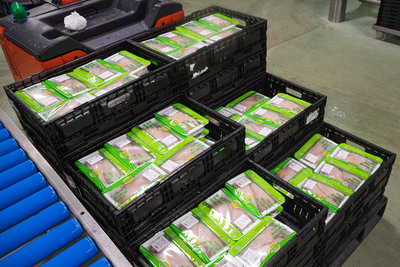
To support operational continuity, Mt Barker worked with Multisteps to establish a supply structure that includes local warehousing in Perth and regular tray deliveries aligned with production demand.
“The ability to receive trays regularly without having to carry excessive stock onsite has been valuable,” Finlayson said.
Collaboration around forecasting and supply planning has also improved inventory visibility.
“There’s a constant conversation around forward planning and supply timelines,” he said. “That provides assurance to our purchasing and operations teams.”
Building long-term partnerships
Mt Barker’s approach to supplier relationships reflects its long-term operational philosophy.
“We don’t change suppliers frequently,” Finlayson said. “Our label supplier has been with us for more than 20 years, and our previous tray supplier was with us for over a decade.”
Instead, the company prioritises partnerships with suppliers willing to invest alongside the business.
“Knowing that a supplier is investing in manufacturing capability and local infrastructure is important,” he said. “As we grow, we want to know our partners are growing with us.”
Looking ahead
As consumer expectations evolve, Finlayson expects protein packaging requirements to continue changing.
“I think consumers expect the industry to keep improving recyclability,” he said.
At the same time, the growth of convenience products and ready-to-cook formats is increasing demand for packaging solutions that deliver greater functionality.
“We’re seeing more convenience lines, more product innovation and more packaging requirements to support that.”
For processors like Mt Barker, collaboration with packaging partners will remain essential.
“Ultimately it comes down to flexibility,” Finlayson said. “We invest heavily in product development, so we need partners who are willing to work with us and explore new solutions.”
Processor insight
For Finlayson, the key lesson is that packaging decisions should always be viewed through an operational lens.
“Packaging often gets treated as a procurement decision,” he said. “But in processing it has a direct impact on production flow, product presentation and supply continuity.”
“Working with suppliers who understand the realities of processing — and who can support multiple formats and materials — makes it much easier to adapt as our product range evolves.”
Phone: 1300 228 077
Epicor Prism portfolio of vertical AI agents
Epicor Prism is a portfolio of vertical AI agents designed specifically for the supply chain...
Sidel filler for edible oil
Sidel Group's filler for edible oil has been designed for filling precision and ease of use.
GEA ProCoater wet coating machine
The GEA ProCoater is a wet coating machine developed to help food processors achieve more stable...