Making UHT processing less intensive on energy

Dairy and plant-based food and beverage producers have long faced a dual challenge: delivering safe, high-quality products while working towards system optimisation and sustainability goals. Thermal processing, particularly ultra-high temperature (UHT) treatment, is one of the most energy-intensive steps in a food or dairy factory.
The traditional UHT infusion system exacerbates this problem, as steam is typically used once and then released, thereby wasting its heat potential. Companies committed to energy efficiency — both for the sake of sustainability targets and their bottom line — face an ongoing challenge: how to maintain product integrity and safety while making this core process more efficient and climate-friendly.
The challenge
A customer in the nutritional beverages processing sector was seeking a more sustainable way to produce beverages using more energy-efficient methods. The company has measurable goals related to its carbon footprint and was looking for ways to lower gas consumption.
Across a typical facility, thermal processes such as UHT, evaporation and pasteurisation account for 60–70% of total energy consumption, often relying on fossil-fuel boilers, which increase operating costs and carbon emissions.
The solution: a closed-loop approach with SteamRecycle
SPX FLOW has developed the SteamRecycle system to transform steam from a single-use resource into a recyclable, closed, energy-recovery loop. This electrification technology integrates directly with infusion UHT systems, and is designed to enable the recovery and re-use of 100% of the steam used during treatment.
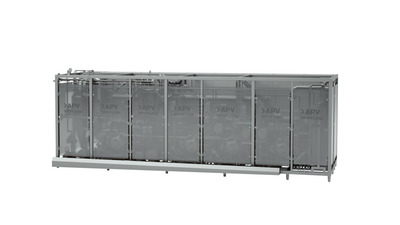
While testing the SteamRecycle, the customer no longer needed continuous fossil fuel resources for thermal heating in the infusion UHT system. During use, steam is 100% reused to provide a greener energy solution.
When implementing the system, paired with infusion UHT systems, there was minimal chemical change at the exact needed bacteria kill-rate, without sacrificing quality. The processor reported no change in the product’s quality, including shelf life, colour, viscosity or any other properties.
The system works by recirculating vapours from the flash chamber back into the infusion vessel, effectively replacing the continuous need for fresh boiler steam once the process has started. This single-step change has reduced fuel use, cut water demand and eliminated the constant reliance on fossil-fuel boilers for steam generation.
By integrating SteamRecycle into its UHT lines, the beverage processor achieved measurable results, turning sustainability targets into tangible operational benefits while upholding product quality.
Features of the system include:
- Emissions reduction: the system eliminates continuous steam demand, which can help to lower annual carbon dioxide (CO2) emissions by more than 1000 tons per year for a single UHT line (at a capacity of 12,000 LPH running 6000 hours per year).
- Efficiency gains: with a coefficient of performance (COP) of nearly 4, the system is designed to deliver almost four times as much energy as the electricity it consumes.
- Resource conservation: the closed-loop system reduces water circulation requirements, reducing water use by up to 33 m3/h.
This successful application of SteamRecycle demonstrates that sustainability can go hand-in-hand with operational efficiency and profitability, preparing plants for integration with renewable electricity grids and boosting competitiveness in an environmentally conscious market.
Phone: 03 9589 9222.
Key Technology COMPASS Optical Sorters
Key Technology has introduced new enhancements for its COMPASS belt-fed optical sorter.
Emerson Rosemount 9000 Series Magnetic Flow Meters
The magnetic flow meter portfolio is designed to deliver diagnostic insights to detect issues...
Rafi RAMO E emergency stop buttons with Plug&Play connection
RAFI is expanding its easy-to-install RAMO product family with new emergency stop buttons.