Turning apple by-products into food packaging of the future
Fourth-year food technology student Ed Ron Ng at Massey University is exploring how food processing by-products can be transformed into sustainable, high-performance packaging materials thanks to a new scholarship from Revo Packaging.
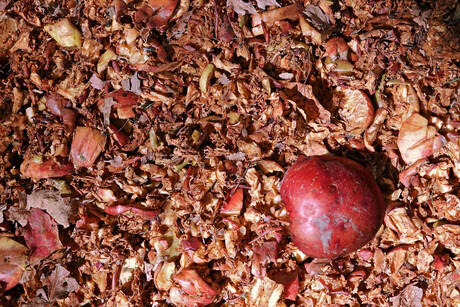
As the inaugural recipient, Ng’s project is investigating how apple pomace — the skins, pulp and seeds left behind after apples are juiced or processed — can be combined with wood pulp to create paper-based packaging with enhanced performance characteristics.
The scholarship from REVO Packaging has helped fund access to specialised equipment, materials and testing, as well as travel to collect fruit-processing waste streams for use in the research.
“Apples are processed for juice almost year-round in Hawke’s Bay, creating a continuous supply of pomace. It’s currently a low-value by-product used for stock feed, but has shown promise for cellulose-based packaging, with the potential to improve on existing materials even before additives are added,” Ng said.
Preliminary findings showed that blending apple pomace with wood pulp can improve certain mechanical properties compared with traditional wood-pulp paper alone.
“Combined with related work undertaken in collaboration with the Bioeconomy Science Institute (BSI), our findings indicate that supplementing traditional wood pulp with 20% apple pomace can increase both tensile strength and tensile stiffness by approximately 50%. This is significant because it suggests apple pomace could not only replace some conventional fibre sources but also improve important material properties,” Ng said.
While apple pomace is showing promise in the proof-of-concept project, the technique could also be applied to other types of fruit waste that are readily available.
“The main technical hurdle is improving the material’s resistance to water and oils, so that it is suitable for a wider range of food-packaging applications,” Ng said.
The next step is to focus on improving the material’s barrier properties and assessing its commercial feasibility.
Project supervisor and Senior Lecturer in Packaging Technology Dr Eli Gray-Stuart said industry support plays a vital role in enabling students to undertake research with real-world relevance.
SMaRT-Pack centre to help drive sustainable packaging transition
Led by Monash University, the research centre has been launched to focus on the adoption of...
Peacock Bros. and insignia to unite under one roof in Victoria
Peacock Group is building a purpose-built facility in Dandenong South which is set to bring...
International Day of Awareness of Food Loss and Waste
AIP is recognising International Day of Awareness of Food Loss and Waste on 29 September 2026,...