Migrating microplastics from packaging, new study released
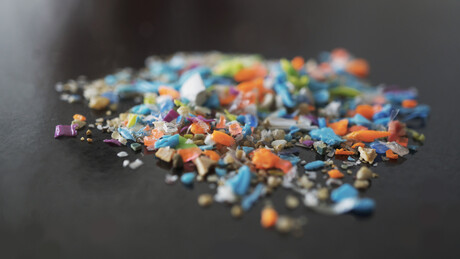
A study, published by Earth Action in collaboration with rePurpose Global, has mapped the scale of microplastics moving from packaging into food and drinks.
The study, ‘Pack to Plate’, quantifies the release of micro- and nanoplastics (MNP) from food packaging directly into food. It estimates that 1000 tonnes of MNP move from plastic packaging into food and drinks every year.
A central finding of the report is that microplastic exposure from packaging is not random but driven by three predictable factors: material choice, packaging design, and real-world use conditions.
“For years the debate around microplastics focused on pollution in the environment. Now we know of the direct pathway to human exposure through the food we eat every day,” said Julien Boucher, PhD, Head of Research and Co-CEO of Earth Action.
“This report identifies the scale of the problem but also points to the solutions. If policymakers and industry start treating particle release as a real safety consideration, alongside chemical migration, we have clear opportunities to reduce exposure.”
The findings summarised
Design elements such as caps, closures and multi-component structures introduce points of friction that increase particle release, particularly during repeated opening and handling. Use-phase conditions introduce further variability. Sunlight and UV exposure alone can increase particle release by up to two orders of magnitude. Thermal stress from hot filling or microwaving acts as a secondary amplifier, weakening the material and significantly increasing particle detachment.
Packaging is not the largest source of microplastics in the environment by mass but as it is in direct, continuous contact with food and beverages, it creates a more concentrated human ingestion pathway than environmental routes such as water or air. Other environmental sources include car tyre wear, synthetic textiles, paints and mismanaged plastic waste.
Due to the predictability of migration, the report provides a framework for identifying high-risk packaging formats and outlines practical measures for industry that could reduce particle release.
These include:
- limiting UV exposure during transport and retail display;
- redesigning high-stress components such as caps and closures;
- testing packaging under realistic use conditions including heating and repeated handling.
The full report is available here.
SMaRT-Pack centre to help drive sustainable packaging transition
Led by Monash University, the research centre has been launched to focus on the adoption of...
Peacock Bros. and insignia to unite under one roof in Victoria
Peacock Group is building a purpose-built facility in Dandenong South which is set to bring...
International Day of Awareness of Food Loss and Waste
AIP is recognising International Day of Awareness of Food Loss and Waste on 29 September 2026,...