Making sweets with added benefits

interpack 2026 conveys a resounding message: the confectionery industry is changing — in terms of its technology, its functions and its role in sustainability. Three of the 18 exhibition halls are specifically dedicated to process and packaging technology for confectionery and baked goods, in a demonstration that manufacturers are responding to new consumer habits, evolving recipes and rising sustainability requirements.
Whether it’s chocolate, sweets, fruit gums or chewing gum — confectionery remains popular, but consumer expectations are undergoing a noticeable change. The demand is no longer just for sweet treats, but for products with added health benefits: plant-based and sugar-free recipes, organic ingredients, protein-rich snacks and innovative ingredients that make taste, colour and texture a multi-sensory experience.
At the same time, processing and packaging requirements are on the rise. Confectionery is one of the most demanding foods when it comes to production technology: high fat content, sticky surfaces, temperature-sensitive recipes and high standards placed on appearance, freshness and shelf life require machines, materials and processes that are coordinated with precision. interpack 2026 will showcase the solutions the industry is developing to meet these needs — from sustainable packaging materials and flexible machine concepts to digital added value right along the value chain.
The global confectionery market is growing continuously. Last year, market researchers estimated the market for chocolate confectionery alone at around US$173bn, and the trend continues unbroken. The market is expected to grow to over US$300bn by 2034, which represents an annual increase of almost 7%.
Due to its barrier properties, plastic has long been considered indispensable, especially for confectionery, which is sensitive to oxygen, moisture and fat migration. At interpack, proof will be delivered that this assumption is becoming more and more outdated. Paper-based barrier packaging, monomaterials and recyclable solutions have long since made the leap from niche to industrial practice.
Companies such as interpack exhibitor Koehler Paper are one of the drivers of this development with functional papers. Product lines such as NexPlus Advanced or NexPlus Seal Coat offer packaging papers that have oxygen, mineral oil and grease barriers, are heat- or cold-sealable and can be easily recycled in the waste paper stream. These materials can be visually impressive as well, as seen from the high-gloss finish of the latest generation. On packaging machines, the paper can be processed at the same speed as plastic and, moreover, can be heat-sealed at lower temperatures.
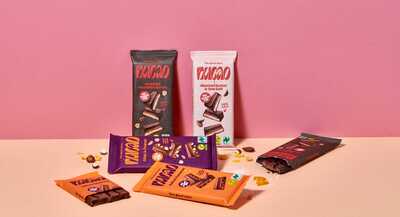
Sustainable concepts have already been successfully implemented. For example, the startup Nucao has used primary packaging made from NexPlus Advanced paper; and Vivani has used compostable NatureFlex film from Futamura for its chocolates. Supplemented by FSC-certified paper wrapping and mineral-oil-free printing inks, sustainable packaging is transformed into a brand message.
Processing the alternatives
Alongside the packaging materials themselves, machine concepts are also under development. The focus here is on modularity, flexibility and convertibility. Manufacturers such as Theegarten-Pactec and Rovema are responding to these requirements with machine platforms that are able to process different materials and formats. Theegarten-Pactec is presenting its new FPC6 for the first time at interpack. The machine packs chocolate bars, tablets and pralines in tubular bags and is aimed specifically at manufacturers of chocolate, confectionery, muesli and protein bars, functional food and snacks, as well as at co-packers and contract packers. The machine not only processes a wide variety of product formats, but can also handle multiple sealing types — cold sealing, heat sealing and hot-wire cut-off systems for water-soluble films.
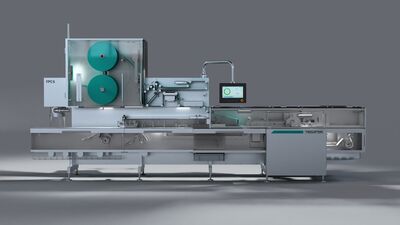
At the trade fair, Theegarten-Pactec is now presenting an additional folding method, the ‘Smart Bunch’, for the CHS confectionery packaging machine, which was first presented at interpack 2023. This extension is designed not only to increase the machine’s flexibility, but also to reduce consumption of packaging materials.
With its BVC 250 Candy, launched last year, Rovema has a flow-wrapping machine that is able to process monomaterials and composites as well as paper and paper composites, achieving output rates of up to 300 bags per minute. In order to meet the complex requirements for sustainable packaging, Rovema said it works together with packaging manufacturers and tests alternative packaging materials for machinability, sealing properties and performance parameters. Recently, the company demonstrated the production of paper bags that can be resealed after opening by simply tucking them inside each other.
Adding new features to packaging is a topic that interpack exhibitors are also addressing. Resealability, intuitive operation and an improved user experience are taking centre stage. Exhibitor Aplix’s Easylock is an example of how such added value can be realised technically. The sensory hook-to-hook closure system made of recyclable PE provides acoustic and tactile feedback when opening and closing the bags and is particularly tolerant of product particles — which represents an advantage for confectionery, too.
Beyond pure technology, the topic of digitalisation and transparency is also becoming more prominent in the confectionery sector. One chocolate manufacturer’s new traceability solution has just been distinguished with the German Sustainability Award 2026. Consumers can use the QR codes on the packaging to trace the origin of their product’s cocoa back to the agricultural community that produced it. This is made possible by a smart tracking tool that links all the data from the source to the chocolate factory. Digitalisation in the confectionery industry, therefore, not only increases efficiency, but also creates trust.
Running from 7–13 May 2026 in Düsseldorf, interpack 2026 will also present how sensitive baked goods can be safely produced and packaged.
For further information, visit www.interpack.de.
Transforming waste into UV-blocking food packaging
Researchers in Japan have developed a sustainable strategy to upcycle microplastic waste into...
APCO Platform for next phase of packaging reform in Australia
Following the Australian Government's decision not to introduce a new national packaging...
Turning apple by-products into food packaging of the future
A food technology student project at Massey University is exploring how food processing...