Labelling scheme proposed for ready-to-eat foods
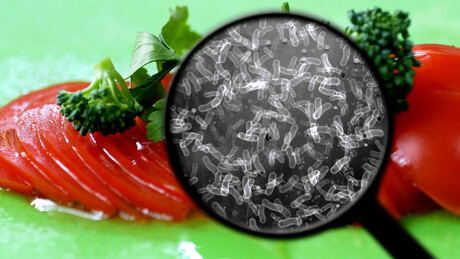
In order to reduce the number of Listeria infections from food, researchers at the DTU National Food Institute (DTU) have proposed a new labelling scheme designed to give consumers a better opportunity to choose ready-to-eat foods, such as smoked salmon and spiced pork roll, without the potential risk of Listeria monocytogenes bacteria.
Traditionally, efforts to combat Listeria have focused on cleaning in the food industry, but this has proved to be not enough.
“Cleaning at the production stage is very important when it comes to preventing Listeria, but it has not prevented a rise in the number of people falling ill. We suggest maintaining the focus on cleaning, but also placing a new and equally important focus on producing food in such a way that Listeria cannot grow in ready-to-eat products,” said Martin Laage Kragh, a researcher at the DTU National Food Institute
There are many different approaches to making food products safe from Listeria, depending on the type of food involved. However, it is currently difficult for consumers to determine which products have been stabilised to prevent the growth of Listeria and which have not.
Laage Kragh said a labelling scheme should be introduced to help consumers identify ready-to-eat foods that have been stabilised during production to prevent the growth of Listeria.
The researchers propose a voluntary labelling scheme using the word “STABILISED” to make it easier for selection by consumers.
“The label should only be used by producers who can demonstrate that Listeria cannot grow in their products,” said Professor Lisbeth Truelstrup Hansen from the DTU National Food Institute.
In short, stability means that the product’s preservation must be appropriate for the stated shelf life.
“Many products have a shelf life that is too long given the way they are made. But by changing the recipe — and often this requires only a small change — the products can be made safe,” said Professor Emeritus Paw Dalgaard from the DTU National Food Institute.
From 1 July 2026, the EU has introduced stricter rules requiring manufacturers of non-stabilised products to demonstrate that the level of Listeria monocytogenes does not exceed 100 bacteria per gram throughout the entire shelf life of the ready-to-eat product. If they are unable to do so, the bacterium must not be detectable in a 25-gram sample.
Root cause analysis
The researchers also suggest that products which have led to recent outbreaks of Listeria infections should be analysed in a new way, so that the reason Listeria grew in the products can be quickly identified. As things stand, the authorities often identify the source of infection in outbreaks, but this has frequently failed to prevent new outbreaks.
“We propose that investigations should also look into whether the manufacturer is using a formulation where preservation could be improved, or whether the product’s shelf life should, for example, be shortened to prevent new outbreaks,” said Paw Dalgaard.
The researchers’ recommendations have been published in a scientific article in the journal Current Opinion in Food Science.
SMaRT-Pack centre to help drive sustainable packaging transition
Led by Monash University, the research centre has been launched to focus on the adoption of...
Peacock Bros. and insignia to unite under one roof in Victoria
Peacock Group is building a purpose-built facility in Dandenong South which is set to bring...
International Day of Awareness of Food Loss and Waste
AIP is recognising International Day of Awareness of Food Loss and Waste on 29 September 2026,...