A natural way to manufacture wild strawberry flavour
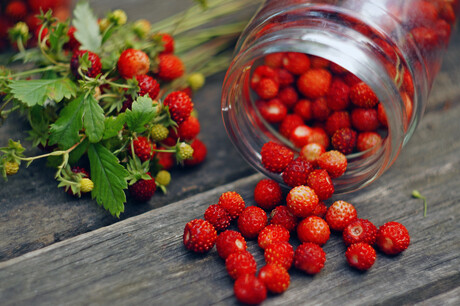
Researchers have used a kind of fungus that can decay food waste to produce the sweet aromas of the famously difficult to obtain wild strawberries. These berries, sweeter and more intensely aromatic than the strawberries one might usually find in grocery stores, are tricky to find reliably in the wild so synthetic flavourings are the standard way of utilising this flavour in foods.
As published in the Journal of Agriculture and Food Chemistry, scientists have now developed a natural alternative, one that involves edible fungus producing the flavouring by being fed blackcurrant juice. This renewable process means that the usual natural way of getting the scent — scrounging for the small berries in forest environments — is not the only method available.
The process relies on the use of a brown rot fungus, Wolfiporia cocos, that is known to break down organic matter in accompaniment with a pleasant scent. By feeding this fungus a slew of chemicals and blackcurrant pomace, which is the usually discarded slush of seeds, pulp and skins left over after the currants are used to make juice, the W. cocos was able to produce the wild strawberry flavour. The manufactured smell was deemed to be almost identical to the real one by sensory experts.
More research will need to be done on this method in order to develop it into a consistent and safe way to produce the scent, but in the end this may result in a natural way of producing a wild strawberry odour, without the synthetic chemicals that are usually relied on for this fragrance. Consumers with a discerning palette and a desire to only ingest natural products will likely be impressed by this outcome.
The paper can be read here.
Closing the sensory gap with no- and low-alcohol wine
Reducing alcohol in wine changes sensory characteristics, so researchers are exploring ways to...
pladis program plans to help with a snacking reshape
The second year of pladis's Accelerator Programme is now open for food-tech startups that can...
Scientists identify a novel peptide derived from red alga
Seaweed is commonly used as an ingredient in many food products, but researchers have now...