RMIT launches $25m hub to drive future food production
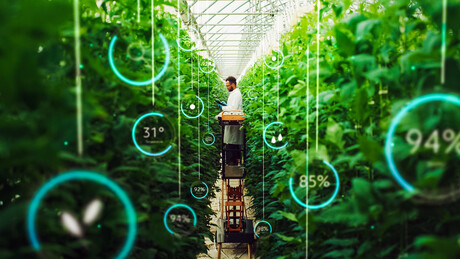
RMIT University has launched The ARC Research Hub for Intelligent Energy Efficiency in Future Protected Cropping (E2Crop Hub), which is designed to advance sustainable protected cropping with intelligent, renewable and energy-efficient greenhouse solutions for the future of agriculture.
Supported by the Australian Research Council (ARC), the E2Crop Hub is led by RMIT University and includes researchers from three other Australian universities.
Working alongside 12 industry partners over a five-year research program, the hub will focus on delivering advanced energy technologies for greenhouses, enabling them to be self-sustained, affordable and powered by renewable energy, and new automated decision-making techniques for farmers.
Distinguished Professor Tianyi Ma, Director E2Crop Hub, said it was an example of tertiary–industry collaboration to solve societal challenges of today and the future.
“The E2Crop Hub brings together leading research capabilities from RMIT University, The Australian National University, Western Sydney University and The University of New South Wales,” he said.
“This expertise is paired together with innovative industry leaders such as Innofocus Photonics Technology, South East Water, ClearVue Technologies, Vecor Technologies, GreenPlus, Protected Cropping Australia, Evident Australia, and many more.”
Three research themes at the heart of the hub
- The first theme is renewable energy, which focuses on solving the large energy consumption challenge associated with controlling the microclimate in greenhouses, including lighting, temperature, humidity and CO2 levels. The Hub aims to develop intelligent, energy-efficient systems that can dynamically adjust these factors in response to real-time environmental changes.
- The second theme is plant optimisation, to amplify crop yield and nutrition within controlled environments. Focusing on tailoring nutrient and CO2 levels, alongside precise microclimate adjustments, this theme promises to fine-tune the internal conditions of greenhouses to achieve unparalleled efficacy in crop cultivation.
- The final theme is intelligent cropping, converging artificial intelligence (AI), the Internet of Things (IoT) and big data to foster intelligent cropping, aiming for responsive and self-regulating greenhouse ecosystems. The focus is on real-time monitoring and predictive analytics for proactive management, streamlining greenhouse operations for optimal plant performance with minimal resource input.
“The world urgently needs smarter and more sustainable ways to grow food,” Ma said. “Protected cropping — including high-tech greenhouses and vertical farming — will play a critical role in future food production.
“But these systems are energy intensive. To scale sustainably, the future of agriculture must be a future of intelligent and energy-efficient innovation.
“That is the challenge that sits at the heart of the E2Crop Hub, and it is one we at the Hub are uniquely positioned to address.”
APPEX 2027 is now open for registrations
APPEX 2027 registrations open for Australia's Processing and Packaging Expo, which is...
Facing the manufacturing workforce challenges of the future
Skills shortages persist as manufacturing workforce demand is expected to grow over 12% by 2035,...
Funding to help expand global demand for Victorian dairy
The Victorian Government has partnered with Dairy Australia on a program designed to help local...