GM variety of Cavendish bananas gets approval in Australia
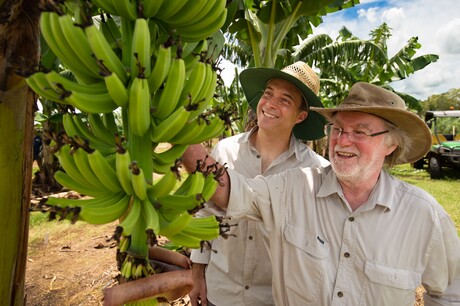
The Australian Government has issued QUT a licence to commercially release QCAV-4, a genetically modified (GM) variety of Cavendish banana. Food derived from the banana line QCAV-4 has also been assessed as safe and nutritious by Food Standards Australia New Zealand (FSANZ) and at the Food Ministers’ Meeting (FMM) on 16 February it was approved as suitable for human consumption.
The FMM, made up of ministers from Australian state and territory governments and the Australian and New Zealand governments, has 60 days to either ratify FSANZ’s decision or request a review.
Made with a single banana resistance gene, the QCAV-4 banana is claimed to be the world’s first GM banana to be approved for commercial production and also the first Australian GM fruit approved for growing in Australia.
The GM banana is designed to provide a potential safety net against the devastating Panama Disease tropical race 4 (TR4) which threatens the global US$20 billion banana industry.
QUT Distinguished Professor James Dale and his team have been working on developing and growing genetically modified Cavendish bananas for more than 20 years.
“This is a major step for QCAV-4 and comes after many years of development,” Dale said.
“We welcome this decision as it’s a very important step towards building a safety net for the world’s Cavendish bananas from TR4, which has impacted many parts of the world already.”
QCAV-4 bananas, developed in partnership with government and industry, have been grown in field trials in the Northern Territory for more than seven years and have proven to be resistant to Panama Disease TR4.
Panama Disease TR4 has already crippled Cavendish banana production in Asia, has started to take a foothold in South America. Australia’s biosecurity rules have so far limited the impact of TR4 on the majority of the Australian industry; however, it has been found in parts of North Queensland and has decimated the Northern Territory commercial banana industry.
There are no plans to grow or sell QCAV-4 bananas to consumers in Australia at this time.
Closing the sensory gap with no- and low-alcohol wine
Reducing alcohol in wine changes sensory characteristics, so researchers are exploring ways to...
pladis program plans to help with a snacking reshape
The second year of pladis's Accelerator Programme is now open for food-tech startups that can...
Scientists identify a novel peptide derived from red alga
Seaweed is commonly used as an ingredient in many food products, but researchers have now...