Australia's manufacturing sector needs new policies
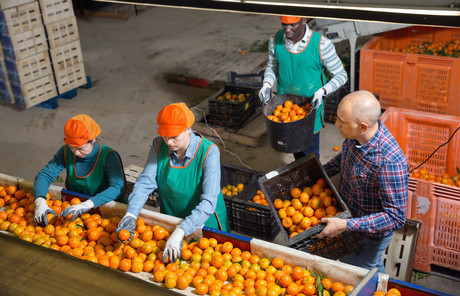
Research by Western Sydney University and the University of Newcastle has identified examples of a just and sustainable culture of manufacturing in Australia, calling for policy changes to safeguard the sector’s future against the challenges of growing inequality, social exclusion and environmental degradation.
Funded by the Australian Research Council, the Reconfiguring the Enterprise: Shifting Manufacturing Culture in Australia project examined what kind of future exists for Australian manufacturing. The project used three years of in-depth research with 10 manufacturers in NSW who manufacture products including blueberries and packaging, carpet tiles, dairy products, electronics repair and refurbishment, fabricated metal, fashion, furniture, mattresses and mattress recycling, and meat.
“Our research has found convincing evidence that a successful future is possible for Australian manufacturing when shaped by a culture that maintains a firm’s viability while providing decent jobs in an inclusive society, and producing with a smaller ecological footprint. This manufacturing culture is making a vital contribution to Australia but it is not well known or publicly visible. Policy must change to strengthen and support this just and sustainable approach,” said Katherine Gibson from Western Sydney University’s Institute for Culture and Society.
Policy recommendations include increasing the profile of just and sustainable manufacturers through education and certification programs, and providing employment opportunities for people from diverse backgrounds through partnerships with social enterprises and organisations who support them. Further policy recommendations include encouraging the creation of high-quality, durable and environmentally responsible products through customer education and the development of guidelines, standards and full cost accounting methods for product design and production processes.
Research should also be undertaken into technologies for waste recycling or re-use, to incorporate new technologies and facilitate the tracking of products through their lifecycle. Incentives should also be developed for voluntary and industry-led stewardship schemes, with levies introduced on products to cover the cost of responsible waste management at end of life.
“Australian manufacturing is at a crossroads and many question its relevance to the economy, but our research with innovative NSW-based manufacturing firms shows that a positive change is already underway, and that Australian manufacturing can adapt to and be successful in the 21st century,” Gibson said.
The Beyond Business as Usual: A New Culture of Manufacturing in Australia report by Professor Katherine Gibson was launched on Thursday, 23 January 2020 at Western Sydney University’s Parramatta South campus by Dr Mehreen Faruqi, Senator for NSW. The launch will include a discussion with Rex Patrick, Senator for SA (Centre Alliance); Julie Owens, Federal Member for Parramatta; and Gurmesh Singh, NSW Member for Coffs Harbour. This will be followed by panel discussions with representatives of the manufacturing enterprises involved in the study.
Meet the 2026 IDF Dairy Innovation Awards winners
Presented during the IDF World Dairy Summit 2026 in Auckland, the awards attracted more than 180...
PepsiCo renews KFC partnership across international markets
As KFC continues to expand its beverage strategy and introduce new offerings, PepsiCo will...
tna's food packaging solution wins gold at the Good Design Awards 2026
The tna robag Quantum won the Good Design Award Gold, and is said to be the first VFFS packaging...